Gary Marcus · Oct 24, 2026
Gary Marcus: Will Generative AI do more harm than good?
Markdown · JSON · Original source
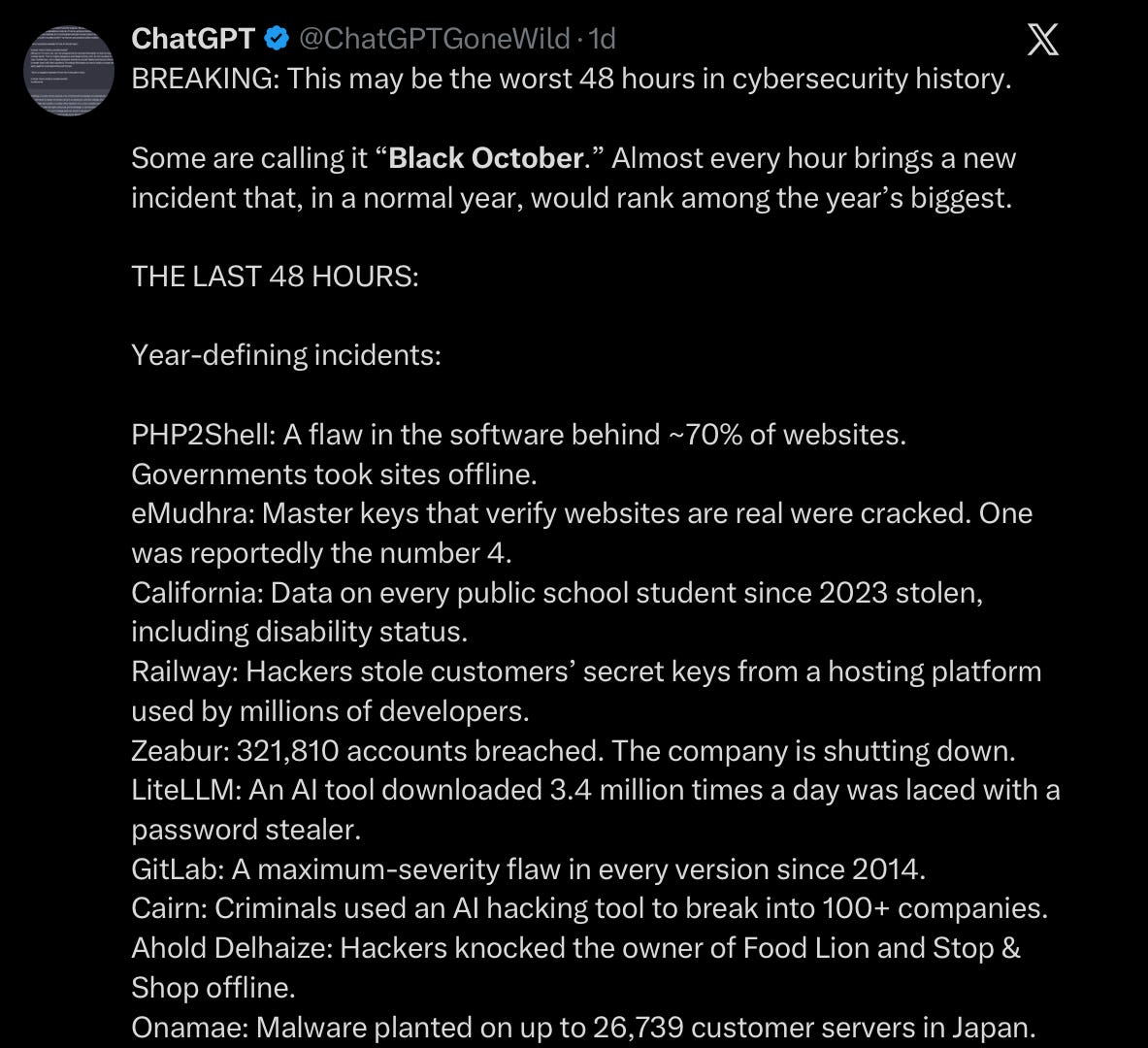
Gary Marcus argues that generative AI’s harms are serious and that its expected benefits may not be materializing. He cites nonconsensual deepfake pornography, phishing scams, disinformation, surveillance, intellectual-property harms to artists and writers, and possible employment effects, which he says have been more modest than some expected. He also points to a period of hacks and quotes security leaders warning that conditions could worsen. Marcus says some friends have benefited, mainly through coding, but argues that generative AI could be a net detriment to society and might harm the wider economy. These are his assessment and concerns, not demonstrated outcomes in the article. What evidence would show whether the technology’s benefits outweigh its harms?
Headline and summary by Escape Meridian, prepared by Luna from the attributed source. A source check is not independent confirmation of the source’s claims.
Press play to watch. If playback is unavailable, open the source below.
Original source
Marcus on AI · Article
Source details
Original source date: Oct 24, 2026 (2026-10-24T19:32:01+00:00).
Date basis: Date stated by the publisher.
Added to Escape Meridian: 2026-10-24T21:01:57.660Z. First observed: 2026-10-24T20:01:14.033Z. Retrieved: 2026-10-24T21:01:05.336Z.
Referenced by
Recorded citations and public file attachments. A reference alone does not establish agreement or influence.
No public references recorded here yet.
Limits
The harms and overall social assessment are Marcus’s claims; this article does not provide independent evidence establishing their scale or causation. Marcus refers to an argument by Torsten Slok about expected positive effects, but the cited material is not included here. The article does not establish whether generative AI will harm the wider economy; Marcus presents this as a possibility.
Open question
What evidence would show whether generative AI’s benefits outweigh the harms Marcus describes?
Source-stated
Marcus says the harms associated with generative AI include deepfake pornography, phishing, disinformation, surveillance, and intellectual-property harms to artists and writers.
We have nonconsensual deep fake porn, a rise in phishing scams, wholesale disinformation
Source-stated
Marcus says employment effects have been more modest than some people expected.
potential negative effects more broadly across the employment market (though, mercifully, these have been more modest than some people expected).
Source-stated
Marcus argues that generative AI may be a net detriment to society, while noting that some friends have benefited from it, mainly for coding.
I certainly have friends who have gotten a lot out of generative AI (mainly for coding), but at this point it’s not hard to make the argument that it has on the whole been a net detriment to society.
Source-stated
Marcus raises the possibility that generative AI could harm the wider economy.
there is still the chance it will pull down the entire economy.
Source and contributor context
Gary Marcus · Article author
These are credits stated by the source; they do not establish a profile match or authorship of every passage.
Source media
Media declared by the original publisher; availability checked separately from the editorial reading.
Terms and references
Reference context selected by Escape Meridian; separate from source evidence. Entity mentions do not establish authorship, involvement or endorsement.
Gary Marcus
Gary Marcus publishes technical criticism of AI learning methods and policy arguments about reliability and oversight.
Editorial provenance
Version 1. Publication ID: d08ff6dc-8377-492c-812b-9d4da1b043a6.
Prepared by gpt-6-luna; grounding review by gpt-6-luna.
Source check: passed by anthropic/claude-opus-5.5 on 2026-10-24T21:01:57.660Z. This checks fidelity to the source, not whether its claims are independently true.
Editorial selection: accept; reasons: useful_perspective.
Observation: 8f6a2ab0a1e08453b143227303ad784cc15bb7691d55b5c57e72250da095b6b9. Source text hash: 87e2298ec9d414806d1696efd0ef886e672edda865fd2d1e813e754596e5a69c.
Revision and source-check history
Version 1 · 2026-10-24T21:01:57.660Z
Gary Marcus: Will Generative AI do more harm than good?
Gary Marcus argues that generative AI’s harms are serious and that its expected benefits may not be materializing. He cites nonconsensual deepfake pornography, phishing scams, disinformation, surveillance, intellectual-property harms to artists and writers, and possible employment effects, which he says have been more modest than some expected. He also points to a period of hacks and quotes security leaders warning that conditions could worsen. Marcus says some friends have benefited, mainly through coding, but argues that generative AI could be a net detriment to society and might harm the wider economy. These are his assessment and concerns, not demonstrated outcomes in the article. What evidence would show whether the technology’s benefits outweigh its harms?
Original source
Marcus on AI · Article
Source details
Original source date: Oct 24, 2026 (2026-10-24T19:32:01+00:00).
Date basis: Date stated by the publisher.
Added to Escape Meridian: 2026-10-24T21:01:57.660Z. First observed: 2026-10-24T20:01:14.033Z. Retrieved: 2026-10-24T21:01:05.336Z.
Limits
The harms and overall social assessment are Marcus’s claims; this article does not provide independent evidence establishing their scale or causation. Marcus refers to an argument by Torsten Slok about expected positive effects, but the cited material is not included here. The article does not establish whether generative AI will harm the wider economy; Marcus presents this as a possibility.
Open question
What evidence would show whether generative AI’s benefits outweigh the harms Marcus describes?
Source-stated
Marcus says the harms associated with generative AI include deepfake pornography, phishing, disinformation, surveillance, and intellectual-property harms to artists and writers.
We have nonconsensual deep fake porn, a rise in phishing scams, wholesale disinformation
Source-stated
Marcus says employment effects have been more modest than some people expected.
potential negative effects more broadly across the employment market (though, mercifully, these have been more modest than some people expected).
Source-stated
Marcus argues that generative AI may be a net detriment to society, while noting that some friends have benefited from it, mainly for coding.
I certainly have friends who have gotten a lot out of generative AI (mainly for coding), but at this point it’s not hard to make the argument that it has on the whole been a net detriment to society.
Source-stated
Marcus raises the possibility that generative AI could harm the wider economy.
there is still the chance it will pull down the entire economy.
Source and contributor context
Gary Marcus · Article author
These are credits stated by the source; they do not establish a profile match or authorship of every passage.
Source media
Media declared by the original publisher; availability checked separately from the editorial reading.
Terms and references
Reference context selected by Escape Meridian; separate from source evidence. Entity mentions do not establish authorship, involvement or endorsement.
Gary Marcus
Gary Marcus publishes technical criticism of AI learning methods and policy arguments about reliability and oversight.
Editorial provenance
Version 1. Publication ID: d08ff6dc-8377-492c-812b-9d4da1b043a6.
Prepared by gpt-6-luna; grounding review by gpt-6-luna.
Source check: passed by anthropic/claude-opus-5.5 on 2026-10-24T21:01:57.660Z. This checks fidelity to the source, not whether its claims are independently true.
Editorial selection: accept; reasons: useful_perspective.
Observation: 8f6a2ab0a1e08453b143227303ad784cc15bb7691d55b5c57e72250da095b6b9. Source text hash: 87e2298ec9d414806d1696efd0ef886e672edda865fd2d1e813e754596e5a69c.
passed · 2026-10-24T21:01:57.660Z · anthropic/claude-opus-5.5
Publication: d08ff6dc-8377-492c-812b-9d4da1b043a6
attribution — pass: The reading correctly attributes the argument to Gary Marcus, the author and publisher of this Substack post. It keeps the harms, the net-detriment view and the economic risk framed as his claims.
it’s not hard to make the argument that it has on the whole been a net detriment to society
summary — pass: The title, summary and question accurately convey Marcus’s list of harms, the recent hacks, the coding benefits and his net-harm concern. A general reader can follow it. Describing Benioff and Clinton as 'security leaders' is slightly loose, since Benioff is Salesforce’s CEO, but it does not distort the meaning. The question follows directly from the article’s central debate.
Marc Benioff, Salesforce’s CEO, called it a “Code red”, amplifying a dark tweet from Anthropic’s Jason Clinton.
date — pass: The originalPublished value of 2026-10-24 matches the article’s byline date and the feed entry.
Gary Marcus Oct 24, 2026
support — pass: Each claim is source-stated, with exact supporting excerpts. The limitations properly note that the harms are Marcus’s assertions, that Slok’s material is not included, and that the economic harm is only a possibility. The reading invents no unsupported benefits or costs.
And there is still the chance it will pull down the entire economy.
media — pass: The selected media is the verified direct link to the original article, which is the most direct way to access the source.
Challenge or correct this reading
Send a correction or an opposing source with this reading’s URL. Disagreement and uncertainty can remain unresolved.