
Marty Cagan · Nov 6, 2026
AI is exposing three different product roles, Silicon Valley Product Group argues
Markdown · JSON · Original source
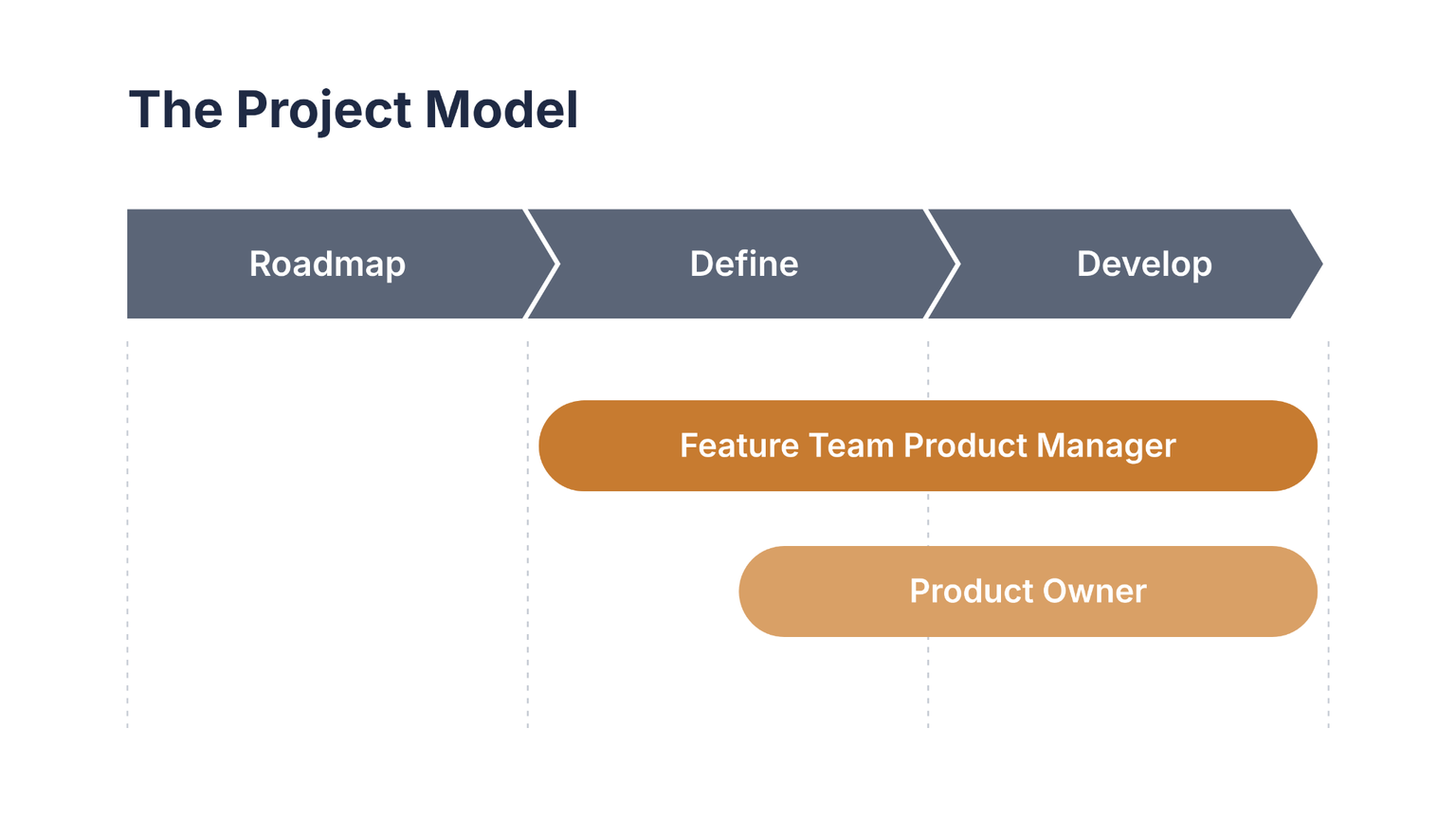
’s article, presented as a narrative version of a keynote, argues that disagreement over whether the product role is becoming more or less important often reflects different ways companies organize product work. It distinguishes project-model feature team product managers and product owners from product-model empowered team product managers. In the article’s account, project-model roles focus on coordinating or managing delivery of already chosen features and projects. The author argues that AI can automate parts of delivery work. The article says this can reduce the need for feature team product managers and contribute to phasing out product owner roles. By contrast, the article describes empowered team product managers as helping teams discover solutions to important problems and achieve outcomes. It argues that this work draws on product sense, customer and market knowledge, and judgment about value and business viability. The author expects demand for these skills to increase while delivery is no longer the bottleneck. For probabilistic products, the article says assessing viability risks makes this role especially important. The distinction matters to people whose responsibilities may be shaped by their company’s operating model, not just their job title. These are the author’s expectations, not reported measurements of job losses or️
Headline and summary by Escape Meridian, prepared by Luna from the attributed source. A source check is not independent confirmation of the source’s claims.
Original source
· Article
Source details
Original source date: Nov 6, 2026 (2026-11-06T01:02:22+00:00).
Date basis: Date stated by the publisher.
Added to Escape Meridian: 2026-11-06T01:08:40.988Z. First observed: 2026-11-06T01:03:28.081Z. Retrieved: 2026-11-06T01:07:28.734Z.
Referenced by
Recorded citations and public file attachments. A reference alone does not establish agreement or influence.
No public references recorded here yet.
Limits
The source does not identify the keynote speaker by name; the publisher is . The article offers expectations about how AI may affect roles, not reported measurements of job losses or future demand. The source says the need for oversight of feature team product managers is unclear. The article does not quantify how many companies use each operating model or how quickly roles may change.
Open question
How much of feature team product managers’ work can companies automate while still providing the oversight the article says may be needed?
Source-stated
The article distinguishes three product roles according to whether a company uses a project model or a product model.
When using the project model, there are two different product roles, although it is not uncommon for companies to have both: the feature team product manager and the agile product owner.
Source-stated
The author expects AI automation to reduce the need for feature team product managers, while noting that the remaining need for oversight is uncertain.
It is clear that there is less need for feature team product managers, but it is less clear how many may still be needed to provide some level of oversight beyond what the engineers and their agents can do.
Source-stated
The author says product owners are already being phased out as AI changes delivery work and sprint processes.
Today, with AI disrupting the delivery process by both automating and accelerating the engineering activities and workflows, and with so much of the sprint process obviated, the product owner role is already being phased out.
Source-stated
The article expects demand for empowered team product managers to grow because product discovery requires skills beyond delivery workflows.
And I expect this will continue to increase the demand for people with this knowledge and skills.
Source and contributor context
Marty Cagan · Article author
These are credits stated by the source; they do not establish a profile match or authorship of every passage.
Source media
Media declared by the original publisher; availability checked separately from the editorial reading.
Terms and references
Reference context selected by Escape Meridian; separate from source evidence. Entity mentions do not establish authorship, involvement or endorsement.
Agentic AI
AI systems that plan and carry out a series of steps toward a goal, often by using other software, rather than giving one answer.
Silicon Valley Product Group
Silicon Valley Product Group, founded by Marty Cagan, publishes essays and coaching material on product management and product leadership.
Editorial provenance
Version 1. Publication ID: 57f489a0-9214-4e67-8ab6-c9c5fd2f0e95.
Prepared by gpt-6-luna; grounding review by gpt-6-luna.
Source check: uncertain by anthropic/claude-opus-5.5 on 2026-11-06T01:08:40.988Z. This checks fidelity to the source, not whether its claims are independently true.
Editorial selection: accept; reasons: useful_perspective.
Observation: 8f7916520238f95c987ebd4f52bd2701586afb993cb3fdfca06fe88ae1b0be80. Source text hash: 9d5f0b552bd669407a2dfdfaec2f0f9537e6b057ae5063c5de98320f82713e51.
Revision and source-check history
Version 1 · 2026-11-06T01:08:40.988Z
AI is exposing three different product roles, Silicon Valley Product Group argues
’s article, presented as a narrative version of a keynote, argues that disagreement over whether the product role is becoming more or less important often reflects different ways companies organize product work. It distinguishes project-model feature team product managers and product owners from product-model empowered team product managers. In the article’s account, project-model roles focus on coordinating or managing delivery of already chosen features and projects. The author argues that AI can automate parts of delivery work. The article says this can reduce the need for feature team product managers and contribute to phasing out product owner roles. By contrast, the article describes empowered team product managers as helping teams discover solutions to important problems and achieve outcomes. It argues that this work draws on product sense, customer and market knowledge, and judgment about value and business viability. The author expects demand for these skills to increase while delivery is no longer the bottleneck. For probabilistic products, the article says assessing viability risks makes this role especially important. The distinction matters to people whose responsibilities may be shaped by their company’s operating model, not just their job title. These are the author’s expectations, not reported measurements of job losses or️
Original source
· Article
Source details
Original source date: Nov 6, 2026 (2026-11-06T01:02:22+00:00).
Date basis: Date stated by the publisher.
Added to Escape Meridian: 2026-11-06T01:08:40.988Z. First observed: 2026-11-06T01:03:28.081Z. Retrieved: 2026-11-06T01:07:28.734Z.
Limits
The source does not identify the keynote speaker by name; the publisher is . The article offers expectations about how AI may affect roles, not reported measurements of job losses or future demand. The source says the need for oversight of feature team product managers is unclear. The article does not quantify how many companies use each operating model or how quickly roles may change.
Open question
How much of feature team product managers’ work can companies automate while still providing the oversight the article says may be needed?
Source-stated
The article distinguishes three product roles according to whether a company uses a project model or a product model.
When using the project model, there are two different product roles, although it is not uncommon for companies to have both: the feature team product manager and the agile product owner.
Source-stated
The author expects AI automation to reduce the need for feature team product managers, while noting that the remaining need for oversight is uncertain.
It is clear that there is less need for feature team product managers, but it is less clear how many may still be needed to provide some level of oversight beyond what the engineers and their agents can do.
Source-stated
The author says product owners are already being phased out as AI changes delivery work and sprint processes.
Today, with AI disrupting the delivery process by both automating and accelerating the engineering activities and workflows, and with so much of the sprint process obviated, the product owner role is already being phased out.
Source-stated
The article expects demand for empowered team product managers to grow because product discovery requires skills beyond delivery workflows.
And I expect this will continue to increase the demand for people with this knowledge and skills.
Source and contributor context
Marty Cagan · Article author
These are credits stated by the source; they do not establish a profile match or authorship of every passage.
Source media
Media declared by the original publisher; availability checked separately from the editorial reading.
Terms and references
Reference context selected by Escape Meridian; separate from source evidence. Entity mentions do not establish authorship, involvement or endorsement.
Agentic AI
AI systems that plan and carry out a series of steps toward a goal, often by using other software, rather than giving one answer.
Silicon Valley Product Group
Silicon Valley Product Group, founded by Marty Cagan, publishes essays and coaching material on product management and product leadership.
Editorial provenance
Version 1. Publication ID: 57f489a0-9214-4e67-8ab6-c9c5fd2f0e95.
Prepared by gpt-6-luna; grounding review by gpt-6-luna.
Source check: uncertain by anthropic/claude-opus-5.5 on 2026-11-06T01:08:40.988Z. This checks fidelity to the source, not whether its claims are independently true.
Editorial selection: accept; reasons: useful_perspective.
Observation: 8f7916520238f95c987ebd4f52bd2701586afb993cb3fdfca06fe88ae1b0be80. Source text hash: 9d5f0b552bd669407a2dfdfaec2f0f9537e6b057ae5063c5de98320f82713e51.
uncertain · 2026-11-06T01:08:40.988Z · anthropic/claude-opus-5.5
Publication: 57f489a0-9214-4e67-8ab6-c9c5fd2f0e95
attribution — pass: The page names no individual author, so attributing the argument to Silicon Valley Product Group as publisher is reasonable. The limitations disclose the missing speaker name. The Shreyas Doshi quote is not misattributed.
NOTE: This is a narrative form of a keynote for the 2026 Product Leader Summit.
summary — uncertain: The summary's final sentence is truncated and ends with a stray character, reading 'not reported measurements of job losses or'. Smallest repair: complete it, e.g. 'or future demand.' Also, 'probabilistic products' is central to one claim but unexplained. The source footnote defines it as products whose results can be much less predictable, so a short gloss or tooltip is needed. The rest is a faithful account of the three-role thesis.
it can be much more complicated for probabilistic products where the results can be much less predictable.
date — pass: originalPublished (2026-11-06, publisher page) matches the feed entry. No earlier publication is evident. The keynote framing (2026 Product Leader Summit) is consistent with this date.
support — pass: The claims are supported by verbatim source passages. The demand expectation keeps its condition ('while delivery is no longer the bottleneck'), and uncertainty about oversight is preserved. The question follows directly from the source's stated unclear oversight need. The softening to 'contribute to phasing out' slightly understates the source's 'already being phased out', but the matching claim states it accurately.
So long as the bottleneck is no longer product delivery, I expect the focus will necessarily be on the skills and techniques to determine the right product to build
media — pass: The selected media is the verified direct link to the original SVPG article, which is the most direct way to access the source.
Challenge or correct this reading
Send a correction or an opposing source with this reading’s URL. Disagreement and uncertainty can remain unresolved.
Silicon Valley Product Group, founded by Marty Cagan, publishes essays and coaching material on product management and product leadership.
Explore Silicon Valley Product GroupAI systems that plan and carry out a series of steps toward a goal, often by using other software, rather than giving one answer.
Definition referenceSilicon Valley Product Group, founded by Marty Cagan, publishes essays and coaching material on product management and product leadership.
Explore Silicon Valley Product GroupSilicon Valley Product Group, founded by Marty Cagan, publishes essays and coaching material on product management and product leadership.
Explore Silicon Valley Product GroupSilicon Valley Product Group, founded by Marty Cagan, publishes essays and coaching material on product management and product leadership.
Explore Silicon Valley Product GroupAI systems that plan and carry out a series of steps toward a goal, often by using other software, rather than giving one answer.
Definition referenceSilicon Valley Product Group, founded by Marty Cagan, publishes essays and coaching material on product management and product leadership.
Explore Silicon Valley Product GroupSilicon Valley Product Group, founded by Marty Cagan, publishes essays and coaching material on product management and product leadership.
Explore Silicon Valley Product Group