
Mariejo Ramos · Dec 3, 2024
Filipino call-centre workers face AI threat
Markdown · JSON · Original source
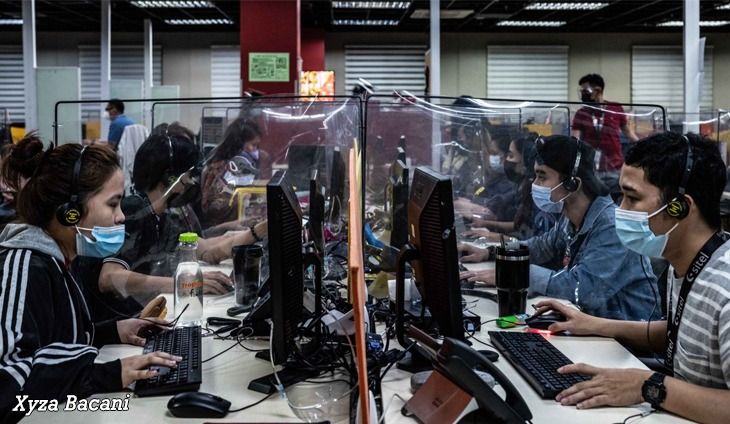
A Thomson Reuters Foundation report describes Filipino call-centre workers’ concerns that AI could displace the customer-care work that helped make business process outsourcing (BPO) a major employer in the Philippines. Mylene Cabalona, a worker and labour association leader, argues that training workers to use AI must go hand-in-hand with protecting labour rights. She says workers can be dismissed when clients consider them unproductive, and calls for unions to seek better wages, job security and workplace protections in an industry she describes as non-unionised. The report also describes a shift in the work available: a survey found that more than half of 60 companies were actively working to integrate AI, while 10% said they had fully implemented it. Boldr CEO David Sudolsky says automation of some entry-level jobs has made hiring and backfilling harder, and warns that fewer entry-level roles could leave workers needing new jobs. The report notes that AI may create roles such as training chatbots, alongside training in programming, data science, data analytics and AI ethics. But Cabalona’s argument is that gaining those skills alone does not resolve workers’ existing labour-rights concerns. The report presents displacement and new technical roles as risks and possibilities, not established outcomes.
Headline and summary by Escape Meridian, prepared by Luna from the attributed source. A source check is not independent confirmation of the source’s claims.
Original source
· Article
Source details
Original source date: Dec 3, 2024 (2024-12-03T13:37:00.000Z).
Date basis: Date stated by the publisher.
Added to Escape Meridian: 2026-11-07T17:07:58.712Z. First observed: 2026-11-05T15:41:56.887Z. Retrieved: 2026-11-07T16:52:25.320Z.
Referenced by
Recorded citations and public file attachments. A reference alone does not establish agreement or influence.
No public references recorded here yet.
Limits
The company survey reports respondents’ stated progress integrating AI; it does not establish the extent of resulting job displacement. The report describes possible new roles and risks to existing jobs, not measured employment outcomes from AI adoption.
Open question
As AI changes entry-level BPO work, will training workers to use AI be enough to secure their employment, as Sudolsky asks?
Source-stated
Cabalona argues that training workers for AI should go hand-in-hand with addressing labour-rights problems in the BPO industry.
the promise of upskilling workers to tackle the challenge of AI should go hand-in-hand with resolving deep-seated issues such as lack of labour rights within the industry.
Source-stated
A survey found that more than half of 60 companies were actively working to integrate AI into their workflows, and 10% said they had fully implemented AI technology.
More than half of 60 companies surveyed this year by the IT and Business Process Association of the Philippines (IBPAP) said they were "actively working" on integrating AI into their workflows. Ten percent of the companies said they had fully implemented AI technology
Source-stated
Sudolsky says automation of some lowest-skilled jobs has made it harder to hire new people or backfill some roles, and warns of displacement risk.
automation of the lowest-skilled jobs, primarily in e-commerce, had made it harder to hire new people or backfill some roles.
Source-stated
The report describes AI-related training in programming, data science, data analytics and AI ethics, while Cabalona says workers’ labour rights must also be protected.
This includes training them in programming, data science, data analytics, and AI ethics. But beyond upskilling, Cabalona said labour rights of BPO workers must first be protected.
Source and contributor context
Mariejo Ramos · Article author
These are credits stated by the source; they do not establish a profile match or authorship of every passage.
Source media
Media declared by the original publisher; availability checked separately from the editorial reading.
Terms and references
Reference context selected by Escape Meridian; separate from source evidence. Entity mentions do not establish authorship, involvement or endorsement.
The Star
The Star is a Malaysian newspaper publishing national and international reporting on public affairs, business and technology.
Editorial provenance
Version 1. Publication ID: d975f685-7f24-4c7e-8f64-7e3dc9500fa0.
Prepared by gpt-6-luna; grounding review by gpt-6-luna.
Source check: uncertain by anthropic/claude-opus-5.5 on 2026-11-07T17:07:58.712Z. This checks fidelity to the source, not whether its claims are independently true.
Editorial selection: accept; reasons: useful_perspective.
Observation: fbd580823717543a93db43c022faf3f6a01a97467046e916bfb18e604d85c8ad. Source text hash: c5103b74decf7d35d09dd1490db89173a2a88c88280ff18d4054e9863ae3e624.
Revision and source-check history
Version 1 · 2026-11-07T17:07:58.712Z
Filipino call-centre workers face AI threat
A Thomson Reuters Foundation report describes Filipino call-centre workers’ concerns that AI could displace the customer-care work that helped make business process outsourcing (BPO) a major employer in the Philippines. Mylene Cabalona, a worker and labour association leader, argues that training workers to use AI must go hand-in-hand with protecting labour rights. She says workers can be dismissed when clients consider them unproductive, and calls for unions to seek better wages, job security and workplace protections in an industry she describes as non-unionised. The report also describes a shift in the work available: a survey found that more than half of 60 companies were actively working to integrate AI, while 10% said they had fully implemented it. Boldr CEO David Sudolsky says automation of some entry-level jobs has made hiring and backfilling harder, and warns that fewer entry-level roles could leave workers needing new jobs. The report notes that AI may create roles such as training chatbots, alongside training in programming, data science, data analytics and AI ethics. But Cabalona’s argument is that gaining those skills alone does not resolve workers’ existing labour-rights concerns. The report presents displacement and new technical roles as risks and possibilities, not established outcomes.
Original source
· Article
Source details
Original source date: Dec 3, 2024 (2024-12-03T13:37:00.000Z).
Date basis: Date stated by the publisher.
Added to Escape Meridian: 2026-11-07T17:07:58.712Z. First observed: 2026-11-05T15:41:56.887Z. Retrieved: 2026-11-07T16:52:25.320Z.
Limits
The company survey reports respondents’ stated progress integrating AI; it does not establish the extent of resulting job displacement. The report describes possible new roles and risks to existing jobs, not measured employment outcomes from AI adoption.
Open question
As AI changes entry-level BPO work, will training workers to use AI be enough to secure their employment, as Sudolsky asks?
Source-stated
Cabalona argues that training workers for AI should go hand-in-hand with addressing labour-rights problems in the BPO industry.
the promise of upskilling workers to tackle the challenge of AI should go hand-in-hand with resolving deep-seated issues such as lack of labour rights within the industry.
Source-stated
A survey found that more than half of 60 companies were actively working to integrate AI into their workflows, and 10% said they had fully implemented AI technology.
More than half of 60 companies surveyed this year by the IT and Business Process Association of the Philippines (IBPAP) said they were "actively working" on integrating AI into their workflows. Ten percent of the companies said they had fully implemented AI technology
Source-stated
Sudolsky says automation of some lowest-skilled jobs has made it harder to hire new people or backfill some roles, and warns of displacement risk.
automation of the lowest-skilled jobs, primarily in e-commerce, had made it harder to hire new people or backfill some roles.
Source-stated
The report describes AI-related training in programming, data science, data analytics and AI ethics, while Cabalona says workers’ labour rights must also be protected.
This includes training them in programming, data science, data analytics, and AI ethics. But beyond upskilling, Cabalona said labour rights of BPO workers must first be protected.
Source and contributor context
Mariejo Ramos · Article author
These are credits stated by the source; they do not establish a profile match or authorship of every passage.
Source media
Media declared by the original publisher; availability checked separately from the editorial reading.
Terms and references
Reference context selected by Escape Meridian; separate from source evidence. Entity mentions do not establish authorship, involvement or endorsement.
The Star
The Star is a Malaysian newspaper publishing national and international reporting on public affairs, business and technology.
Editorial provenance
Version 1. Publication ID: d975f685-7f24-4c7e-8f64-7e3dc9500fa0.
Prepared by gpt-6-luna; grounding review by gpt-6-luna.
Source check: uncertain by anthropic/claude-opus-5.5 on 2026-11-07T17:07:58.712Z. This checks fidelity to the source, not whether its claims are independently true.
Editorial selection: accept; reasons: useful_perspective.
Observation: fbd580823717543a93db43c022faf3f6a01a97467046e916bfb18e604d85c8ad. Source text hash: c5103b74decf7d35d09dd1490db89173a2a88c88280ff18d4054e9863ae3e624.
uncertain · 2026-11-07T17:07:58.712Z · anthropic/claude-opus-5.5
Publication: d975f685-7f24-4c7e-8f64-7e3dc9500fa0
attribution — pass: The reading correctly identifies the piece as a Thomson Reuters Foundation report carried by The Star. It accurately describes Cabalona as a long-time call-centre worker who leads the labour association BIEN, and Sudolsky as Boldr's CEO. The survey figures are presented as survey results rather than as established fact.
Mylene Cabalona has been taking calls for foreign companies from the Philippines since 2010
summary — uncertain: The reading is clear and explains BPO in plain language. One passage merges two separate Sudolsky points. The draft says he 'warns that fewer entry-level roles could leave workers needing new jobs'. In the source, the 'new jobs' remark applies to workers who do not engage with AI; the fewer-entry-level-roles point is a separate displacement warning. Smallest repair: say he warns of displacement if entry-level roles shrink, and that those who don't engage with AI may need new jobs.
Those who don't engage with it may need to find new jobs
date — pass: The originalPublished value is 2024-12-03 from the publisher page, which matches the 2024/12/03 date in the article URL. The text gives no sign of an earlier first publication.
support — uncertain: Claim 4 says Cabalona argues labour rights 'must also be protected'. Its own excerpt says they 'must first be protected', which signals priority, not mere addition. The summary similarly softens this to 'skills alone does not resolve' those concerns. This weakens her stated condition and force. Smallest repair: use 'must first be protected'. The other claims and the limitations are supported by the source.
But beyond upskilling, Cabalona said labour rights of BPO workers must first be protected.
media — pass: The selected media is the verified direct link to the original article on The Star, matching the source URL. It is the most direct way for a reader to reach the source.
Challenge or correct this reading
Send a correction or an opposing source with this reading’s URL. Disagreement and uncertainty can remain unresolved.
The Star is a Malaysian newspaper publishing national and international reporting on public affairs, business and technology.
Explore The StarThe Star is a Malaysian newspaper publishing national and international reporting on public affairs, business and technology.
Explore The Star