· Nov 17, 2026
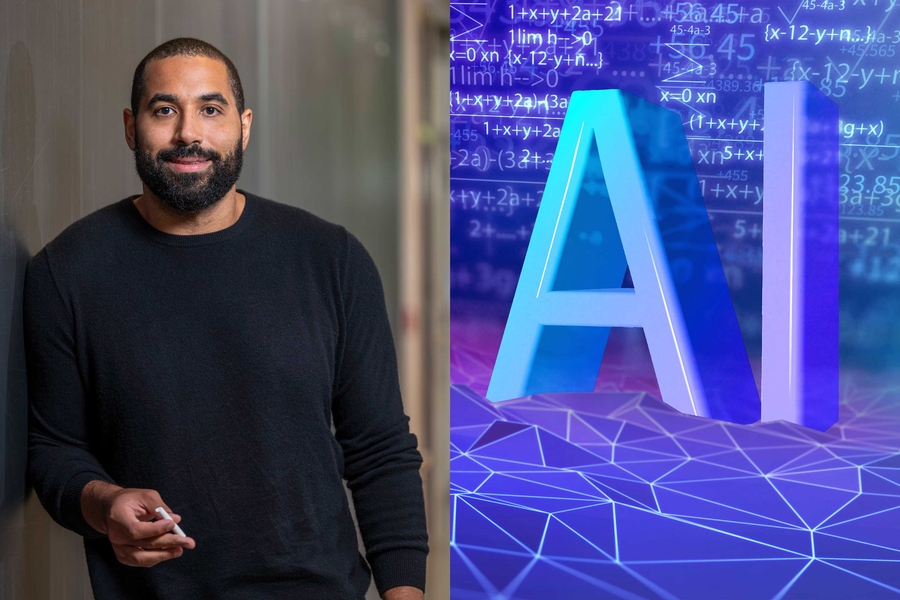
John Urschel argues that learning mathematics still matters in the AI era
Markdown · JSON · Original source
In an interview, John Urschel argues that learning mathematics remains important as AI systems become more capable. He says the pleasure of solving a problem independently is different from using AI, and that students need to build problem-solving ability and understand ideas a machine produces—not merely receive an answer. He describes AI as a “double-edged sword”: it can make knowledge and learning resources more accessible, but using it to finish work without engaging with the material can create “the false impression that you more or less understand what’s going on when you really don’t.” For Urschel, the struggle of working through material is part of learning, not just an inconvenience. He also argues that studying mathematics offers more than expertise: it trains people to think for themselves and learn with peers. He says instructors and institutions share responsibility for useful teaching and for preparing students for a world that has changed. The interview leaves open how courses can make room for AI’s learning resources while still giving students opportunities to develop independent problem-solving skills.
Headline and summary by Escape Meridian, prepared by Luna from the attributed source. A source check is not independent confirmation of the source’s claims.
Original source
· Article
Source details
Original source date: Nov 17, 2026 (2026-11-17T05:00:00Z).
Date basis: Date stated by the publisher.
Added to Escape Meridian: 2026-11-17T05:17:01.782Z. First observed: 2026-11-17T05:03:38.649Z. Retrieved: 2026-11-17T05:16:10.877Z.
Referenced by
Recorded citations in public readings. A reference alone does not establish agreement or influence.
No public references recorded here yet.
Limits
This is an interview presenting Urschel’s perspective; it does not report measured effects of AI use on students’ learning. Urschel says instructors have work to do, but the interview does not specify particular course changes for balancing AI use with independent problem-solving.
Open question
What changes to teaching does Urschel think would help students use AI’s learning resources without losing the opportunity to work through material themselves?
Source-stated
John Urschel argues that students should develop independent problem-solving ability and understand mathematical ideas produced with AI, rather than relying only on answers.
I think it’s very important to elevate the idea of understanding.
Source-stated
Urschel says AI can widen access to knowledge while also making it easier for students to mistake completed work for understanding.
this also can take away your ability to think and learn for yourself.
Source-stated
Urschel argues that working through difficult material is an important part of learning, and that learning with peers improves the experience.
when you don’t struggle with a certain material on your own, I think you can get the impression of learning without actually learning.
Source-stated
Urschel says instructors and institutions have responsibilities both to support students’ learning and to prepare them for a changed world.
we as an institution have a responsibility to prepare students for that.
Source and contributor context
MIT News · Publisher
The publisher is identified here. No individual author has been inferred.
Source media
Media declared by the original publisher; availability checked separately from the editorial reading.
Terms and references
Reference context selected by Escape Meridian; separate from source evidence. Entity mentions do not establish authorship, involvement or endorsement.
MIT News
MIT News reports on research and people at the Massachusetts Institute of Technology.
Editorial provenance
Version 1. Publication ID: a6a46305-9484-4f75-8ade-88b6abbe146a.
Prepared by gpt-6-luna; grounding review by gpt-6-luna.
Source check: uncertain by anthropic/claude-opus-5.5 on 2026-11-17T05:17:01.782Z. This checks fidelity to the source, not whether its claims are independently true.
Editorial selection: accept; reasons: useful_perspective.
Observation: bc6914aca7e730ab79de6147f29ef205600218f28dd18f3a54cb55b873d9bbd1. Source text hash: 1bd5240930d5aaf348f102c76dbcb28a9e6ba19cc2e2669cb23a4ae7378eb312.
Revision and source-check history
Version 1 · 2026-11-17T05:17:01.782Z
John Urschel argues that learning mathematics still matters in the AI era
In an interview, John Urschel argues that learning mathematics remains important as AI systems become more capable. He says the pleasure of solving a problem independently is different from using AI, and that students need to build problem-solving ability and understand ideas a machine produces—not merely receive an answer. He describes AI as a “double-edged sword”: it can make knowledge and learning resources more accessible, but using it to finish work without engaging with the material can create “the false impression that you more or less understand what’s going on when you really don’t.” For Urschel, the struggle of working through material is part of learning, not just an inconvenience. He also argues that studying mathematics offers more than expertise: it trains people to think for themselves and learn with peers. He says instructors and institutions share responsibility for useful teaching and for preparing students for a world that has changed. The interview leaves open how courses can make room for AI’s learning resources while still giving students opportunities to develop independent problem-solving skills.
Original source
· Article
Source details
Original source date: Nov 17, 2026 (2026-11-17T05:00:00Z).
Date basis: Date stated by the publisher.
Added to Escape Meridian: 2026-11-17T05:17:01.782Z. First observed: 2026-11-17T05:03:38.649Z. Retrieved: 2026-11-17T05:16:10.877Z.
Limits
This is an interview presenting Urschel’s perspective; it does not report measured effects of AI use on students’ learning. Urschel says instructors have work to do, but the interview does not specify particular course changes for balancing AI use with independent problem-solving.
Open question
What changes to teaching does Urschel think would help students use AI’s learning resources without losing the opportunity to work through material themselves?
Source-stated
John Urschel argues that students should develop independent problem-solving ability and understand mathematical ideas produced with AI, rather than relying only on answers.
I think it’s very important to elevate the idea of understanding.
Source-stated
Urschel says AI can widen access to knowledge while also making it easier for students to mistake completed work for understanding.
this also can take away your ability to think and learn for yourself.
Source-stated
Urschel argues that working through difficult material is an important part of learning, and that learning with peers improves the experience.
when you don’t struggle with a certain material on your own, I think you can get the impression of learning without actually learning.
Source-stated
Urschel says instructors and institutions have responsibilities both to support students’ learning and to prepare them for a changed world.
we as an institution have a responsibility to prepare students for that.
Source and contributor context
MIT News · Publisher
The publisher is identified here. No individual author has been inferred.
Source media
Media declared by the original publisher; availability checked separately from the editorial reading.
Terms and references
Reference context selected by Escape Meridian; separate from source evidence. Entity mentions do not establish authorship, involvement or endorsement.
MIT News
MIT News reports on research and people at the Massachusetts Institute of Technology.
Editorial provenance
Version 1. Publication ID: a6a46305-9484-4f75-8ade-88b6abbe146a.
Prepared by gpt-6-luna; grounding review by gpt-6-luna.
Source check: uncertain by anthropic/claude-opus-5.5 on 2026-11-17T05:17:01.782Z. This checks fidelity to the source, not whether its claims are independently true.
Editorial selection: accept; reasons: useful_perspective.
Observation: bc6914aca7e730ab79de6147f29ef205600218f28dd18f3a54cb55b873d9bbd1. Source text hash: 1bd5240930d5aaf348f102c76dbcb28a9e6ba19cc2e2669cb23a4ae7378eb312.
uncertain · 2026-11-17T05:17:01.782Z · anthropic/claude-opus-5.5
Publication: a6a46305-9484-4f75-8ade-88b6abbe146a
attribution — pass: The reading correctly attributes the views to John Urschel in an MIT News interview. His arguments are framed as his views, not as established fact. The quoted phrases match the source.
Urschel recently chatted with MIT News about education, AI, and mathematics; excerpts from the conversation follow.
summary — uncertain: The reading never says who Urschel is: an MIT mathematics assistant professor. It also omits his firsthand experience. He used AI tools alongside his own insight on two recent preprints that solved long-standing problems, and he says AI can do certain mathematics much more efficiently than people can. That context gives his case for understanding and independent skill its force; without it, he could read as an outside skeptic. Smallest repair: one sentence identifying him and his AI-assisted proofs. The rest is faithful, including the double-edged sword framing, the value of struggle, community, and institutional responsibility.
he used a combination of human insight and AI tools to solve problems that had stumped mathematicians for decades
date — pass: The originalPublished date of 2026-11-17 matches the publication date shown on the MIT News page.
Publication Date: November 17, 2026
support — pass: Each claim is stated in the source. The limitations correctly note two things: the piece is an interview with no measured effects, and it gives no specific course changes beyond general mentions of recitations and office hours. The question follows from that gap and does not assert an answer. No benefits or costs are invented.
Also, you can get the false impression that you more or less understand what’s going on when you really don’t.
media — pass: The selected media is the verified direct link to the original MIT News article, which is the most direct way to reach the source.
Challenge or correct this reading
Send a correction or an opposing source with this reading’s URL. Disagreement and uncertainty can remain unresolved.
MIT News reports on research and people at the Massachusetts Institute of Technology.
Explore MIT NewsMIT News reports on research and people at the Massachusetts Institute of Technology.
Explore MIT NewsMIT News reports on research and people at the Massachusetts Institute of Technology.
Explore MIT NewsMIT News reports on research and people at the Massachusetts Institute of Technology.
Explore MIT NewsMIT News reports on research and people at the Massachusetts Institute of Technology.
Explore MIT News