
· Nov 2, 2026
MIT News: Barzilay and Collins receive prize for AI-enabled antibiotic discovery
Markdown · JSON · Original source
reports that Regina Barzilay and James Collins received the 2026 Pritzker Prize for AI in Science Research Excellence for work combining AI, bioengineering, and experimental validation to identify antibacterial candidates. The article highlights halicin, described as the first artificial intelligence-discovered antibiotic, and abaucin, a narrow-spectrum antibiotic identified using . The account presents halicin as an example of how AI could speed candidate discovery: a model trained on 2,500 molecules identified it, and the researchers report that testing found activity against antibiotic-resistant bacteria. The article says a process that once took years took weeks. Abaucin’s activity against one species is presented as an advantage because it may reduce harm to beneficial gut bacteria and the likelihood of resistance developing. Collins argues that generative AI could shift AI from a discovery tool to a design tool, potentially opening new directions in antibiotic discovery. Barzilay cautions that drug discovery remains at an early stage: AI automates only parts of the pipeline, and realistic AI models of human biology are still needed. The article does not establish clinical effectiveness or explain how these candidates perform in human treatment. What evidence will show whether AI-designed antibiotic candidates can become effective,|
Headline and summary by Escape Meridian, prepared by Luna from the attributed source. A source check is not independent confirmation of the source’s claims.
Original source
· Article
Source details
Original source date: Nov 2, 2026 (2026-11-02T05:35:00Z).
Date basis: Date stated by the publisher.
Added to Escape Meridian: 2026-11-10T10:39:41.882Z. First observed: 2026-11-02T17:45:14.544Z. Retrieved: 2026-11-03T03:31:59.613Z.
Referenced by
Recorded citations and public file attachments. A reference alone does not establish agreement or influence.
No public references recorded here yet.
Limits
This is an account of the researchers’ work and the prize; it does not provide detailed experimental results or establish clinical effectiveness in humans. The article reports that halicin and abaucin showed activity against bacteria, but does not detail the scope or conditions of that testing. The article does not specify evidence that would establish whether AI-designed antibiotic candidates become effective treatments in humans.
Open question
What evidence will show whether AI-designed antibiotic candidates can become effective treatments in humans?
Source-stated
MIT News reports that Regina Barzilay and James Collins received the 2026 Pritzker Prize for AI in Science Research Excellence for their joint work in AI-enabled antibiotic discovery.
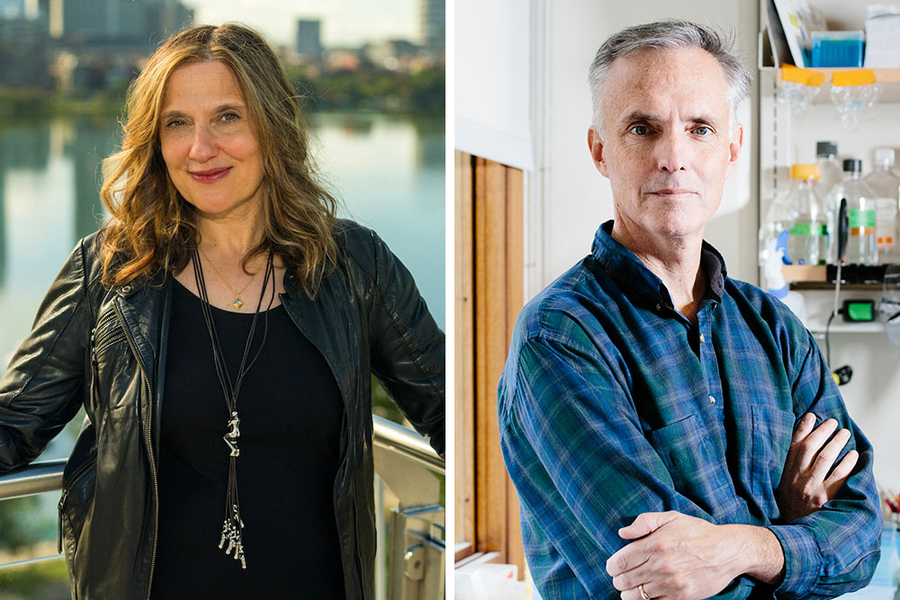
Regina Barzilay, MIT’s School of Engineering Distinguished Professor of AI and Health, and James Collins, MIT’s Termeer Professor of Medical Engineering and Science, are the recipients of the 2026 Pritzker Prize for AI in Science Research Excellence.
Source-stated
The article describes halicin as the first artificial intelligence-discovered antibiotic, identified by a deep learning model trained on 2,500 molecules.
halicin was identified by a deep learning model trained on 2,500 molecules.
Source-stated
MIT News says the team found that halicin could kill antibiotic-resistant bacteria and that the discovery process took weeks rather than years.
A discovery process that once took years was completed in just a few weeks.
Source-stated
The article presents abaucin’s narrow-spectrum efficacy against a single species as an advantage that may minimize resistance and harm to beneficial gut bacteria.
its main advantage, minimizing the likelihood of bacteria developing resistance and harming beneficial bacteria in the gut.
Source-stated
Collins argues that generative AI could shift AI from a discovery tool to a design tool, opening new possibilities in antibiotic discovery.
With generative AI, we're now seeing a shift from AI being used as a tool for discovery to AI being used as a design tool.
Source-stated
Barzilay says AI can automate only parts of drug discovery and that realistic AI models of human biology are needed.
With AI, we can only automate parts of the pipeline, rather than totally transforming the discovery process.
Source and contributor context
MIT News · Publisher
The publisher is identified here. No individual author has been inferred.
Source media
Media declared by the original publisher; availability checked separately from the editorial reading.
Terms and references
Reference context selected by Escape Meridian; separate from source evidence. Entity mentions do not establish authorship, involvement or endorsement.
Machine learning
Methods that let computers learn patterns from examples instead of following rules written by hand.
Deep learning
Machine learning that uses many layers of simple calculations; the basis of most current AI.
MIT News
MIT News reports on research and people at the Massachusetts Institute of Technology.
Editorial provenance
Version 1. Publication ID: f30648b5-42eb-49c1-86d9-21fdd5153eee.
Prepared by gpt-6-luna; grounding review by gpt-6-luna.
Source check: uncertain by anthropic/claude-opus-5.5 on 2026-11-10T10:39:41.882Z. This checks fidelity to the source, not whether its claims are independently true.
Editorial selection: accept; reasons: material_development.
Observation: 54905a456228e40049a1d4b558818d6186496a2beaef8ea76f5fb82013941378. Source text hash: e6eb63677b2e12768559d921d15991a22f0ec833091894e5c950f7cc9ca27d7b.
Revision and source-check history
Version 1 · 2026-11-10T10:39:41.882Z
MIT News: Barzilay and Collins receive prize for AI-enabled antibiotic discovery
reports that Regina Barzilay and James Collins received the 2026 Pritzker Prize for AI in Science Research Excellence for work combining AI, bioengineering, and experimental validation to identify antibacterial candidates. The article highlights halicin, described as the first artificial intelligence-discovered antibiotic, and abaucin, a narrow-spectrum antibiotic identified using . The account presents halicin as an example of how AI could speed candidate discovery: a model trained on 2,500 molecules identified it, and the researchers report that testing found activity against antibiotic-resistant bacteria. The article says a process that once took years took weeks. Abaucin’s activity against one species is presented as an advantage because it may reduce harm to beneficial gut bacteria and the likelihood of resistance developing. Collins argues that generative AI could shift AI from a discovery tool to a design tool, potentially opening new directions in antibiotic discovery. Barzilay cautions that drug discovery remains at an early stage: AI automates only parts of the pipeline, and realistic AI models of human biology are still needed. The article does not establish clinical effectiveness or explain how these candidates perform in human treatment. What evidence will show whether AI-designed antibiotic candidates can become effective,|
Original source
· Article
Source details
Original source date: Nov 2, 2026 (2026-11-02T05:35:00Z).
Date basis: Date stated by the publisher.
Added to Escape Meridian: 2026-11-10T10:39:41.882Z. First observed: 2026-11-02T17:45:14.544Z. Retrieved: 2026-11-03T03:31:59.613Z.
Limits
This is an account of the researchers’ work and the prize; it does not provide detailed experimental results or establish clinical effectiveness in humans. The article reports that halicin and abaucin showed activity against bacteria, but does not detail the scope or conditions of that testing. The article does not specify evidence that would establish whether AI-designed antibiotic candidates become effective treatments in humans.
Open question
What evidence will show whether AI-designed antibiotic candidates can become effective treatments in humans?
Source-stated
MIT News reports that Regina Barzilay and James Collins received the 2026 Pritzker Prize for AI in Science Research Excellence for their joint work in AI-enabled antibiotic discovery.
Regina Barzilay, MIT’s School of Engineering Distinguished Professor of AI and Health, and James Collins, MIT’s Termeer Professor of Medical Engineering and Science, are the recipients of the 2026 Pritzker Prize for AI in Science Research Excellence.
Source-stated
The article describes halicin as the first artificial intelligence-discovered antibiotic, identified by a deep learning model trained on 2,500 molecules.
halicin was identified by a deep learning model trained on 2,500 molecules.
Source-stated
MIT News says the team found that halicin could kill antibiotic-resistant bacteria and that the discovery process took weeks rather than years.
A discovery process that once took years was completed in just a few weeks.
Source-stated
The article presents abaucin’s narrow-spectrum efficacy against a single species as an advantage that may minimize resistance and harm to beneficial gut bacteria.
its main advantage, minimizing the likelihood of bacteria developing resistance and harming beneficial bacteria in the gut.
Source-stated
Collins argues that generative AI could shift AI from a discovery tool to a design tool, opening new possibilities in antibiotic discovery.
With generative AI, we're now seeing a shift from AI being used as a tool for discovery to AI being used as a design tool.
Source-stated
Barzilay says AI can automate only parts of drug discovery and that realistic AI models of human biology are needed.
With AI, we can only automate parts of the pipeline, rather than totally transforming the discovery process.
Source and contributor context
MIT News · Publisher
The publisher is identified here. No individual author has been inferred.
Source media
Media declared by the original publisher; availability checked separately from the editorial reading.
Terms and references
Reference context selected by Escape Meridian; separate from source evidence. Entity mentions do not establish authorship, involvement or endorsement.
Machine learning
Methods that let computers learn patterns from examples instead of following rules written by hand.
Deep learning
Machine learning that uses many layers of simple calculations; the basis of most current AI.
MIT News
MIT News reports on research and people at the Massachusetts Institute of Technology.
Editorial provenance
Version 1. Publication ID: f30648b5-42eb-49c1-86d9-21fdd5153eee.
Prepared by gpt-6-luna; grounding review by gpt-6-luna.
Source check: uncertain by anthropic/claude-opus-5.5 on 2026-11-10T10:39:41.882Z. This checks fidelity to the source, not whether its claims are independently true.
Editorial selection: accept; reasons: material_development.
Observation: 54905a456228e40049a1d4b558818d6186496a2beaef8ea76f5fb82013941378. Source text hash: e6eb63677b2e12768559d921d15991a22f0ec833091894e5c950f7cc9ca27d7b.
uncertain · 2026-11-10T10:39:41.882Z · anthropic/claude-opus-5.5
Publication: f30648b5-42eb-49c1-86d9-21fdd5153eee
attribution — pass: The reading attributes the account to MIT News and attributes the quoted views to Collins and Barzilay. The prize, recipients, and the halicin and abaucin descriptions are presented as article claims, not as established facts.
are the recipients of the 2026 Pritzker Prize for AI in Science Research Excellence
summary — uncertain: The summary ends with a truncated, garbled fragment: 'What evidence will show whether AI-designed antibiotic candidates can become effective,|'. It repeats the question and would display as broken text. Smallest repair: delete the fragment. Terms such as narrow-spectrum, deep learning and generative AI are central but receive little explanation. The source glosses narrow-spectrum as efficacy against a single species, and the draft partly conveys that, so this alone is minor. The title and question are otherwise faithful.
date — pass: originalPublished (2026-11-02) matches the publication date on the page. The draft makes no conflicting date claims, and the 2020 and 2023 dates are not misstated.
Publication Date: November 2, 2026
support — uncertain: The draft says Collins argues generative AI 'could shift' AI from a discovery tool to a design tool. Collins states the shift is already being seen; his 'could' applies only to bringing next-generation drugs. This softens his conviction into a hypothetical. Smallest repair: 'Collins says researchers are now seeing a shift...'. The other claims, including the years-to-weeks timing, 2,500 molecules and abaucin's advantages, are source-stated. The limitations about clinical evidence are appropriately framed as gaps.
With generative AI, we're now seeing a shift from AI being used as a tool for discovery to AI being used as a design tool.
media — pass: The selected media is the verified direct link to the original MIT News article, which is the most direct way to reach the source.
Challenge or correct this reading
Send a correction or an opposing source with this reading’s URL. Disagreement and uncertainty can remain unresolved.
MIT News reports on research and people at the Massachusetts Institute of Technology.
Explore MIT NewsMIT News reports on research and people at the Massachusetts Institute of Technology.
Explore MIT NewsMethods that let computers learn patterns from examples instead of following rules written by hand.
Definition referenceMachine learning that uses many layers of simple calculations; the basis of most current AI.
Definition referenceMIT News reports on research and people at the Massachusetts Institute of Technology.
Explore MIT NewsMIT News reports on research and people at the Massachusetts Institute of Technology.
Explore MIT NewsMIT News reports on research and people at the Massachusetts Institute of Technology.
Explore MIT NewsMethods that let computers learn patterns from examples instead of following rules written by hand.
Definition referenceMachine learning that uses many layers of simple calculations; the basis of most current AI.
Definition referenceMIT News reports on research and people at the Massachusetts Institute of Technology.
Explore MIT NewsMIT News reports on research and people at the Massachusetts Institute of Technology.
Explore MIT News