
· Oct 23, 2026
MIT News: Martha Minow argues AI can weaken democracy—and help support it
Markdown · JSON · Original source
reports that legal scholar Martha Minow used her Karl Taylor Compton Lecture at MIT to assess how artificial intelligence may affect democracy in the United States. She described four foundations: education, reliable and accessible information, security from violence, and fairness. Minow argued that AI can weaken independent thinking, particularly among young people, and deepen concerns about misinformation and declining local journalism. She also proposed uses that could support civic life: AI tutors that prompt students with questions and hints rather than replacing their work, and an “information commons” to help people find reliable information. Her argument is that the effects depend in part on how people design, use, and regulate these systems. MIT News reports her call for technologists to develop tools that support deep thinking and meaningful assessment, while noting that she described substantial risks to democratic institutions and civic norms. The article does not establish whether these proposed tools would improve learning or access to reliable information. What evidence would show that AI tutors strengthen students’ independent thinking without replacing their work?
Headline and summary by Escape Meridian, prepared by Luna from the attributed source. A source check is not independent confirmation of the source’s claims.
Original source
· Article
Source details
Original source date: Oct 23, 2026 (2026-10-23T21:00:00Z).
Date basis: Date stated by the publisher.
Added to Escape Meridian: 2026-11-14T08:47:33.012Z. First observed: 2026-10-23T21:09:06.394Z. Retrieved: 2026-10-24T18:00:46.133Z.
Referenced by
Recorded citations and public file attachments. A reference alone does not establish agreement or influence.
No public references recorded here yet.
Limits
This is ’s account of Minow’s lecture, not a transcript of the full remarks; it does not provide evidence measuring the effects of the proposed tools. The article reports Minow’s observations about polling, journalism, and threats of violence but does not supply underlying studies or detailed methods.
Open question
What evidence would show that AI tutors strengthen students’ independent thinking without replacing their work?
Source-stated
Martha Minow framed her lecture around four foundations of democracy: education, reliable and accessible information, security from violence, and fairness.
Her remarks assessed the state of the U.S. in terms of what she called four key “ingredients” of democracy: education, reliable and accessible information, security from violence, and fairness.
Source-stated
Minow warned that AI could weaken independent thinking, especially among young people.
Leading AI models and interfaces and sycophantic elements endanger the development particularly of young people’s capabilities to think, to remember, and to engage in critical thinking.
Source-stated
Minow proposed developing AI tools that prompt students with questions and hints instead of replacing their work.
Existing LLMs, model training, and interface design can offer nudges and questions and hints rather than replacing student work
Source-stated
Minow proposed an “information commons” to help people access more reliable information.
Civic-minded technologists, she proposed, should work towards establishing a widely-used “information commons,” or many forms of them, to help people access more reliable information.
Escape Meridian interpretation
Whether the proposed AI tools would improve learning or access to reliable information remains unestablished in this account.
there’s so much more that could be developed, and more effectively, to be trustworthy, and to deepen human activities and curiosity
Source and contributor context
MIT News · Publisher
The publisher is identified here. No individual author has been inferred.
Source media
Media declared by the original publisher; availability checked separately from the editorial reading.
Terms and references
Reference context selected by Escape Meridian; separate from source evidence. Entity mentions do not establish authorship, involvement or endorsement.
MIT News
MIT News reports on research and people at the Massachusetts Institute of Technology.
Editorial provenance
Version 1. Publication ID: 98ff4f7d-cfba-4d6d-897e-5a56ec96173a.
Prepared by gpt-6-luna; grounding review by gpt-6-luna.
Source check: uncertain by anthropic/claude-opus-5.5 on 2026-11-14T08:47:33.012Z. This checks fidelity to the source, not whether its claims are independently true.
Editorial selection: accept; reasons: useful_perspective.
Observation: d1b9c9a59907e1d26369df9b14cff219324800cf55c66aece89d6be2e027c1b5. Source text hash: b05d7ef7e4385f5a90da78eaa387f2d552ed6ffa99353a787eb3ce9b2864d172.
Revision and source-check history
Version 1 · 2026-11-14T08:47:33.012Z
MIT News: Martha Minow argues AI can weaken democracy—and help support it
reports that legal scholar Martha Minow used her Karl Taylor Compton Lecture at MIT to assess how artificial intelligence may affect democracy in the United States. She described four foundations: education, reliable and accessible information, security from violence, and fairness. Minow argued that AI can weaken independent thinking, particularly among young people, and deepen concerns about misinformation and declining local journalism. She also proposed uses that could support civic life: AI tutors that prompt students with questions and hints rather than replacing their work, and an “information commons” to help people find reliable information. Her argument is that the effects depend in part on how people design, use, and regulate these systems. MIT News reports her call for technologists to develop tools that support deep thinking and meaningful assessment, while noting that she described substantial risks to democratic institutions and civic norms. The article does not establish whether these proposed tools would improve learning or access to reliable information. What evidence would show that AI tutors strengthen students’ independent thinking without replacing their work?
Original source
· Article
Source details
Original source date: Oct 23, 2026 (2026-10-23T21:00:00Z).
Date basis: Date stated by the publisher.
Added to Escape Meridian: 2026-11-14T08:47:33.012Z. First observed: 2026-10-23T21:09:06.394Z. Retrieved: 2026-10-24T18:00:46.133Z.
Limits
This is ’s account of Minow’s lecture, not a transcript of the full remarks; it does not provide evidence measuring the effects of the proposed tools. The article reports Minow’s observations about polling, journalism, and threats of violence but does not supply underlying studies or detailed methods.
Open question
What evidence would show that AI tutors strengthen students’ independent thinking without replacing their work?
Source-stated
Martha Minow framed her lecture around four foundations of democracy: education, reliable and accessible information, security from violence, and fairness.
Her remarks assessed the state of the U.S. in terms of what she called four key “ingredients” of democracy: education, reliable and accessible information, security from violence, and fairness.
Source-stated
Minow warned that AI could weaken independent thinking, especially among young people.
Leading AI models and interfaces and sycophantic elements endanger the development particularly of young people’s capabilities to think, to remember, and to engage in critical thinking.
Source-stated
Minow proposed developing AI tools that prompt students with questions and hints instead of replacing their work.
Existing LLMs, model training, and interface design can offer nudges and questions and hints rather than replacing student work
Source-stated
Minow proposed an “information commons” to help people access more reliable information.
Civic-minded technologists, she proposed, should work towards establishing a widely-used “information commons,” or many forms of them, to help people access more reliable information.
Escape Meridian interpretation
Whether the proposed AI tools would improve learning or access to reliable information remains unestablished in this account.
there’s so much more that could be developed, and more effectively, to be trustworthy, and to deepen human activities and curiosity
Source and contributor context
MIT News · Publisher
The publisher is identified here. No individual author has been inferred.
Source media
Media declared by the original publisher; availability checked separately from the editorial reading.
Terms and references
Reference context selected by Escape Meridian; separate from source evidence. Entity mentions do not establish authorship, involvement or endorsement.
MIT News
MIT News reports on research and people at the Massachusetts Institute of Technology.
Editorial provenance
Version 1. Publication ID: 98ff4f7d-cfba-4d6d-897e-5a56ec96173a.
Prepared by gpt-6-luna; grounding review by gpt-6-luna.
Source check: uncertain by anthropic/claude-opus-5.5 on 2026-11-14T08:47:33.012Z. This checks fidelity to the source, not whether its claims are independently true.
Editorial selection: accept; reasons: useful_perspective.
Observation: d1b9c9a59907e1d26369df9b14cff219324800cf55c66aece89d6be2e027c1b5. Source text hash: b05d7ef7e4385f5a90da78eaa387f2d552ed6ffa99353a787eb3ce9b2864d172.
uncertain · 2026-11-14T08:47:33.012Z · anthropic/claude-opus-5.5
Publication: 98ff4f7d-cfba-4d6d-897e-5a56ec96173a
attribution — pass: The draft attributes the account to MIT News and the arguments to Martha Minow at her Compton Lecture. It keeps her claims as her assertions rather than established facts.
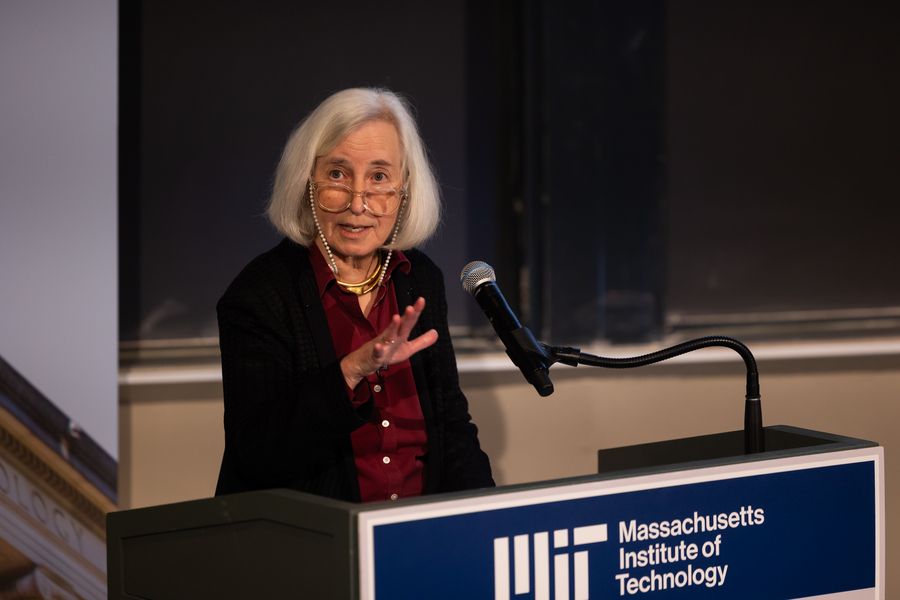
Legal scholar Martha Minow delivered this fall’s Compton Lecture at MIT on Thursday
summary — pass: The title and summary accurately convey her thesis that AI undermines democracy but could help reinforce it. They name her four ingredients and her proposals, and the question follows from the evidence. A smaller fidelity gap: her strongest stated worry, the loss of the Enlightenment, and her line that we must invent the world we want to live in are omitted. That flattens her voice somewhat but does not misrepresent her.
describing how artificial intelligence is undermining it, but could be used to help reinforce traditional U.S. governance
date — pass: originalPublished of 2026-10-23 matches the article's stated publication date. The lecture took place on the Thursday reported in the article.
Publication Date: October 23, 2026
support — uncertain: The draft says Minow argued AI can deepen concerns about declining local journalism. The source attributes the decline in journalists to modern media technology, not to AI specifically. Smallest repair: attribute the journalism decline to modern media technology. The information commons is also presented among uses that support civic life, but the source frames it as work for civic-minded technologists, not explicitly as an AI tool. The other claims are directly supported.
Modern media technology has led to a 75 percent reduction in journalists in recent decades, Minow observed
media — pass: The selected media is the verified direct link to the original MIT News article, which is the most direct way to reach the source.
Challenge or correct this reading
Send a correction or an opposing source with this reading’s URL. Disagreement and uncertainty can remain unresolved.
MIT News reports on research and people at the Massachusetts Institute of Technology.
Explore MIT NewsMIT News reports on research and people at the Massachusetts Institute of Technology.
Explore MIT NewsMIT News reports on research and people at the Massachusetts Institute of Technology.
Explore MIT NewsMIT News reports on research and people at the Massachusetts Institute of Technology.
Explore MIT NewsMIT News reports on research and people at the Massachusetts Institute of Technology.
Explore MIT NewsMIT News reports on research and people at the Massachusetts Institute of Technology.
Explore MIT NewsMIT News reports on research and people at the Massachusetts Institute of Technology.
Explore MIT News