
· Nov 10, 2026
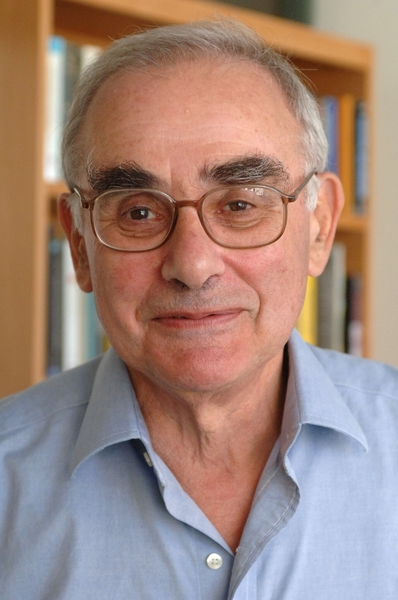
MIT News remembers Jeffrey Goldstone’s influence across physics and quantum computing
Markdown · JSON · Original source
, in an obituary by Scott Morley of the Laboratory for Nuclear Science, recounts Jeffrey Goldstone’s work across theoretical physics and quantum computing. It describes how his work on spontaneously broken symmetries led to the Goldstone theorem and Goldstone bosons, and how later research with collaborators helped shape quantum algorithms. Colleagues quoted in the article describe his influence on fields including particle physics, condensed matter, string theory, and quantum computation, as well as his personal warmth and droll humor. The account also notes a limit: collaborators said the worst-case performance guarantees of the Quantum Approximate Optimization Algorithm generally do not beat the best classical results. Goldstone continued research in quantum computation after retiring from MIT, and the article presents his contributions through both technical achievements and memories from colleagues and friends.
Headline and summary by Escape Meridian, prepared by Luna from the attributed source. A source check is not independent confirmation of the source’s claims.
Original source
· Article
Source details
Original source date: Nov 10, 2026 (2026-11-10T16:10:00Z).
Date basis: Date stated by the publisher.
Added to Escape Meridian: 2026-11-10T16:33:46.014Z. First observed: 2026-11-10T16:18:34.558Z. Retrieved: 2026-11-10T16:32:54.074Z.
Referenced by
Recorded citations and public file attachments. A reference alone does not establish agreement or influence.
No public references recorded here yet.
Limits
This is an institutional obituary that presents Goldstone’s contributions through MIT’s account and comments from colleagues; it is not an independent assessment of the cited work. The article says the Quantum Approximate Optimization Algorithm’s guarantees do not beat the best classical results “with one exception,” but does not identify that exception in the quoted passage. The passage also does not establish practical performance on real-world optimization tasks.
Open question
What further results, if any, would show whether the Quantum Approximate Optimization Algorithm’s worst-case guarantees can outperform the best classical results?
Source-stated
MIT News identifies Goldstone’s work on spontaneously broken continuous symmetries as central to the Goldstone theorem and Goldstone bosons.
he demonstrated that spontaneously broken continuous symmetries must be accompanied by massless, spinless particles — now widely known as Goldstone bosons
Source-stated
The article describes Goldstone’s work with collaborators on quantum computation, including the Quantum Approximate Optimization Algorithm.
FGG introduced the Quantum Approximate Optimization Algorithm. This was the first time a general purpose quantum optimizer could provide worst-case performance guarantees for combinatorial optimization problems.
Source-stated
Farhi says those worst-case guarantees generally do not outperform the best classical results.
These guarantees as of now (with one exception) do not beat the best classical.
Source-stated
MIT News says Goldstone remained active in research in quantum computation for two decades after retiring from MIT.
Even after retiring from MIT, he remained active in research for the next two decades, working in quantum computation.
Source and contributor context
MIT News · Publisher
The publisher is identified here. No individual author has been inferred.
Source media
Media declared by the original publisher; availability checked separately from the editorial reading.
Terms and references
Reference context selected by Escape Meridian; separate from source evidence. Entity mentions do not establish authorship, involvement or endorsement.
MIT News
MIT News reports on research and people at the Massachusetts Institute of Technology.
Editorial provenance
Version 1. Publication ID: 26eddb98-f0fe-4957-84e9-ea766c67ebec.
Prepared by gpt-6-luna; grounding review by gpt-6-luna.
Source check: uncertain by anthropic/claude-opus-5.5 on 2026-11-10T16:33:46.014Z. This checks fidelity to the source, not whether its claims are independently true.
Editorial selection: accept; reasons: historical_context.
Observation: fe1fa8e63946c2162c9dc7248aaea7dc03572b603f0e17678ae12c36f58ced43. Source text hash: ba475e73ea08ba2c6299427503be63f0419dc91807c26f28dfc04bace87fc9be.
Revision and source-check history
Version 1 · 2026-11-10T16:33:46.014Z
MIT News remembers Jeffrey Goldstone’s influence across physics and quantum computing
, in an obituary by Scott Morley of the Laboratory for Nuclear Science, recounts Jeffrey Goldstone’s work across theoretical physics and quantum computing. It describes how his work on spontaneously broken symmetries led to the Goldstone theorem and Goldstone bosons, and how later research with collaborators helped shape quantum algorithms. Colleagues quoted in the article describe his influence on fields including particle physics, condensed matter, string theory, and quantum computation, as well as his personal warmth and droll humor. The account also notes a limit: collaborators said the worst-case performance guarantees of the Quantum Approximate Optimization Algorithm generally do not beat the best classical results. Goldstone continued research in quantum computation after retiring from MIT, and the article presents his contributions through both technical achievements and memories from colleagues and friends.
Original source
· Article
Source details
Original source date: Nov 10, 2026 (2026-11-10T16:10:00Z).
Date basis: Date stated by the publisher.
Added to Escape Meridian: 2026-11-10T16:33:46.014Z. First observed: 2026-11-10T16:18:34.558Z. Retrieved: 2026-11-10T16:32:54.074Z.
Limits
This is an institutional obituary that presents Goldstone’s contributions through MIT’s account and comments from colleagues; it is not an independent assessment of the cited work. The article says the Quantum Approximate Optimization Algorithm’s guarantees do not beat the best classical results “with one exception,” but does not identify that exception in the quoted passage. The passage also does not establish practical performance on real-world optimization tasks.
Open question
What further results, if any, would show whether the Quantum Approximate Optimization Algorithm’s worst-case guarantees can outperform the best classical results?
Source-stated
MIT News identifies Goldstone’s work on spontaneously broken continuous symmetries as central to the Goldstone theorem and Goldstone bosons.
he demonstrated that spontaneously broken continuous symmetries must be accompanied by massless, spinless particles — now widely known as Goldstone bosons
Source-stated
The article describes Goldstone’s work with collaborators on quantum computation, including the Quantum Approximate Optimization Algorithm.
FGG introduced the Quantum Approximate Optimization Algorithm. This was the first time a general purpose quantum optimizer could provide worst-case performance guarantees for combinatorial optimization problems.
Source-stated
Farhi says those worst-case guarantees generally do not outperform the best classical results.
These guarantees as of now (with one exception) do not beat the best classical.
Source-stated
MIT News says Goldstone remained active in research in quantum computation for two decades after retiring from MIT.
Even after retiring from MIT, he remained active in research for the next two decades, working in quantum computation.
Source and contributor context
MIT News · Publisher
The publisher is identified here. No individual author has been inferred.
Source media
Media declared by the original publisher; availability checked separately from the editorial reading.
Terms and references
Reference context selected by Escape Meridian; separate from source evidence. Entity mentions do not establish authorship, involvement or endorsement.
MIT News
MIT News reports on research and people at the Massachusetts Institute of Technology.
Editorial provenance
Version 1. Publication ID: 26eddb98-f0fe-4957-84e9-ea766c67ebec.
Prepared by gpt-6-luna; grounding review by gpt-6-luna.
Source check: uncertain by anthropic/claude-opus-5.5 on 2026-11-10T16:33:46.014Z. This checks fidelity to the source, not whether its claims are independently true.
Editorial selection: accept; reasons: historical_context.
Observation: fe1fa8e63946c2162c9dc7248aaea7dc03572b603f0e17678ae12c36f58ced43. Source text hash: ba475e73ea08ba2c6299427503be63f0419dc91807c26f28dfc04bace87fc9be.
uncertain · 2026-11-10T16:33:46.014Z · anthropic/claude-opus-5.5
Publication: 26eddb98-f0fe-4957-84e9-ea766c67ebec
attribution — pass: The byline (Scott Morley, Laboratory for Nuclear Science) and MIT News as publisher are correct. The QAOA limitation is Farhi's statement. The summary's 'collaborators said' is loose but not wrong, since Farhi speaks for FGG ('we'); naming Farhi, as claim 3 does, would be cleaner.
These guarantees as of now (with one exception) do not beat the best classical.
summary — uncertain: The summary omits the source's most relevant AI point: Farhi says the conjecture that QAOA would reach the Parisi value was recently proven by AI ('the Open AI math dump'). This erases the source's link to AI-driven discovery and Farhi's voice ('I bet Jeffrey would have been surprised and impressed!'). Central terms such as spontaneously broken symmetry, Goldstone boson, worst-case guarantee and 'classical' algorithm go unexplained for general readers. 'Generally do not beat' drops the 'as of now' qualifier. Smallest repair: add one attributed sentence on Farhi's AI-proof remark, keep 'as of now', and add plain-language glosses or tooltips.
Recently the Open AI math dump, the conjecture that the QAOA would hit Parisi, was proven by the AI. I bet Jeffrey would have been surprised and impressed!
date — pass: originalPublished (2026-11-10) matches the article's stated publication date. The death date of Oct. 12 is not misstated, because the draft does not include it.
Publication Date: November 10, 2026
support — pass: Each claim matches a verbatim excerpt. The limitations correctly note the institutional framing, the unidentified exception and the lack of evidence on practical performance. The question follows from the stated limit without presupposing an answer. The source-quoted AI proof claim is Farhi's assertion and should stay attributed if it is added.
Even after retiring from MIT, he remained active in research for the next two decades, working in quantum computation.
media — pass: The selected media is the verified direct link to the original MIT News article, which is the most direct way to access the source.
Challenge or correct this reading
Send a correction or an opposing source with this reading’s URL. Disagreement and uncertainty can remain unresolved.
MIT News reports on research and people at the Massachusetts Institute of Technology.
Explore MIT NewsMIT News reports on research and people at the Massachusetts Institute of Technology.
Explore MIT NewsMIT News reports on research and people at the Massachusetts Institute of Technology.
Explore MIT NewsMIT News reports on research and people at the Massachusetts Institute of Technology.
Explore MIT NewsMIT News reports on research and people at the Massachusetts Institute of Technology.
Explore MIT News