
· Nov 7, 2026
NASA outlines awards and mission plans for Moon Base
Markdown · JSON · Original source
says a new set of awards and mission updates will expand the transportation, science and infrastructure planned for a sustained presence at the Moon’s South Pole. The plans include selecting eight companies eligible to compete for future lunar deliveries under CLPS 2, and moving forward with PROMISE, a nuclear-powered rover intended to examine the surface and subsurface and assess resource potential. NASA says it is targeting a late 2028 launch for the rover; its planned 18-month mission would include testing technology as well as collecting data for landing-site selection and future activities. NASA also awarded task orders for launch and in-space transportation demonstrations, including missions to test communications, navigation and commercial orbital transfer capabilities. Separately, it selected to launch communications satellites to cislunar space in 2028. For surface infrastructure, NASA awarded contracts for components of miniCAST, a planned system combining power and communications. The initial effort will involve components, not a major integrated system, and NASA anticipates a separate solicitation for fully integrated power systems in early 2027. These are announced plans and awards; the release describes intended demonstrations and capabilities, not completed missions or demonstrated results.
Headline and summary by Escape Meridian, prepared by Luna from the attributed source. A source check is not independent confirmation of the source’s claims.
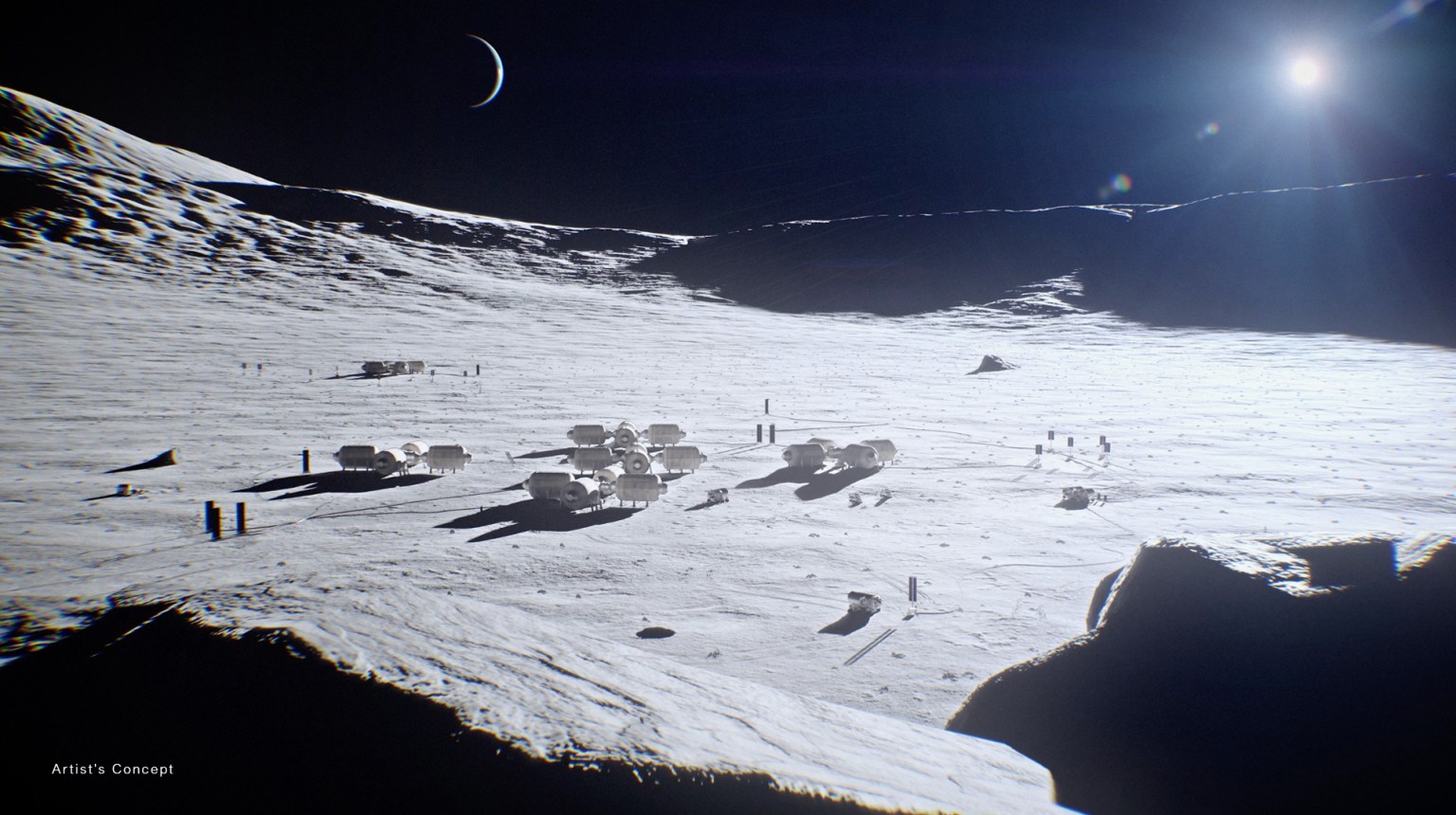
Original source
· Article
Source details
Original source date: Nov 7, 2026 (2026-11-07T22:47:03.000Z).
Date basis: Date supplied by the publisher’s feed.
Added to Escape Meridian: 2026-11-08T00:17:39.773Z. First observed: 2026-11-07T22:48:22.528Z. Retrieved: 2026-11-08T00:01:25.321Z.
Referenced by
Recorded citations and public file attachments. A reference alone does not establish agreement or influence.
No public references recorded here yet.
Limits
The release presents awards, plans, targets, and intended demonstrations; it does not report completed missions or results from the planned demonstrations. says the initial miniCAST effort involves components rather than a major integrated system; the release does not give the requirements for the planned separate solicitation.
Open question
What requirements will set in the separate solicitation for fully integrated power systems, which it anticipates in early 2027?
Source-stated
NASA announced awards and mission updates covering transportation, science, and infrastructure for its planned Moon Base effort at the lunar South Pole.
NASA announced a suite of awards and mission updates on Saturday to expand the agency’s Moon Base exploration, science, and infrastructure capabilities.
Source-stated
Eight companies were selected as eligible to compete for future lunar surface delivery missions under CLPS 2.
NASA selected eight companies for the next phase of its CLPS (Commercial Lunar Payload Services) initiative.
Source-stated
NASA is advancing PROMISE, a nuclear-powered rover planned to study the lunar South Pole and assess resource potential; its launch is targeted for late 2028.
NASA is targeting late 2028 to launch PROMISE and planning an 18-month mission for the rover.
Source-stated
NASA awarded task orders for launch and in-space transportation demonstrations, including missions intended to test communications, navigation, and commercial orbital transfer capabilities.
The task orders have a value of approximately $1.3 billion combined and fall under the 10-year VADR indefinite-delivery/indefinite-quantity contract
Source-stated
NASA awarded contracts for miniCAST components and anticipates a separate solicitation for fully integrated power systems in early 2027.
The agency also plans a separate solicitation for fully integrated power systems, which is anticipated in early 2027.
Source and contributor context
NASA · Publisher
The publisher is identified here. No individual author has been inferred.
Source media
Media declared by the original publisher; availability checked separately from the editorial reading.
Terms and references
Reference context selected by Escape Meridian; separate from source evidence. Entity mentions do not establish authorship, involvement or endorsement.
NASA
NASA is the US agency for civilian space exploration, aeronautics and related scientific research.
SpaceX
SpaceX publishes company updates about launch systems, spacecraft and space infrastructure.
Editorial provenance
Version 1. Publication ID: 10eaa846-317f-4edf-8760-1c6fa29578ce.
Prepared by gpt-6-luna; grounding review by gpt-6-luna.
Source check: passed by anthropic/claude-opus-5.5 on 2026-11-08T00:17:39.773Z. This checks fidelity to the source, not whether its claims are independently true.
Editorial selection: accept; reasons: material_development.
Observation: 8822266504a2df853269c4debab4e08786331f817383bb2d47ceb041e5f9ed3d. Source text hash: 78ff03e9b0f69ffc5e704a674b382b3271a673a604fc65fe11a95c8d8a45fc49.
Revision and source-check history
Version 1 · 2026-11-08T00:17:39.773Z
NASA outlines awards and mission plans for Moon Base
says a new set of awards and mission updates will expand the transportation, science and infrastructure planned for a sustained presence at the Moon’s South Pole. The plans include selecting eight companies eligible to compete for future lunar deliveries under CLPS 2, and moving forward with PROMISE, a nuclear-powered rover intended to examine the surface and subsurface and assess resource potential. NASA says it is targeting a late 2028 launch for the rover; its planned 18-month mission would include testing technology as well as collecting data for landing-site selection and future activities. NASA also awarded task orders for launch and in-space transportation demonstrations, including missions to test communications, navigation and commercial orbital transfer capabilities. Separately, it selected to launch communications satellites to cislunar space in 2028. For surface infrastructure, NASA awarded contracts for components of miniCAST, a planned system combining power and communications. The initial effort will involve components, not a major integrated system, and NASA anticipates a separate solicitation for fully integrated power systems in early 2027. These are announced plans and awards; the release describes intended demonstrations and capabilities, not completed missions or demonstrated results.
Original source
· Article
Source details
Original source date: Nov 7, 2026 (2026-11-07T22:47:03.000Z).
Date basis: Date supplied by the publisher’s feed.
Added to Escape Meridian: 2026-11-08T00:17:39.773Z. First observed: 2026-11-07T22:48:22.528Z. Retrieved: 2026-11-08T00:01:25.321Z.
Limits
The release presents awards, plans, targets, and intended demonstrations; it does not report completed missions or results from the planned demonstrations. says the initial miniCAST effort involves components rather than a major integrated system; the release does not give the requirements for the planned separate solicitation.
Open question
What requirements will set in the separate solicitation for fully integrated power systems, which it anticipates in early 2027?
Source-stated
NASA announced awards and mission updates covering transportation, science, and infrastructure for its planned Moon Base effort at the lunar South Pole.
NASA announced a suite of awards and mission updates on Saturday to expand the agency’s Moon Base exploration, science, and infrastructure capabilities.
Source-stated
Eight companies were selected as eligible to compete for future lunar surface delivery missions under CLPS 2.
NASA selected eight companies for the next phase of its CLPS (Commercial Lunar Payload Services) initiative.
Source-stated
NASA is advancing PROMISE, a nuclear-powered rover planned to study the lunar South Pole and assess resource potential; its launch is targeted for late 2028.
NASA is targeting late 2028 to launch PROMISE and planning an 18-month mission for the rover.
Source-stated
NASA awarded task orders for launch and in-space transportation demonstrations, including missions intended to test communications, navigation, and commercial orbital transfer capabilities.
The task orders have a value of approximately $1.3 billion combined and fall under the 10-year VADR indefinite-delivery/indefinite-quantity contract
Source-stated
NASA awarded contracts for miniCAST components and anticipates a separate solicitation for fully integrated power systems in early 2027.
The agency also plans a separate solicitation for fully integrated power systems, which is anticipated in early 2027.
Source and contributor context
NASA · Publisher
The publisher is identified here. No individual author has been inferred.
Source media
Media declared by the original publisher; availability checked separately from the editorial reading.
Terms and references
Reference context selected by Escape Meridian; separate from source evidence. Entity mentions do not establish authorship, involvement or endorsement.
NASA
NASA is the US agency for civilian space exploration, aeronautics and related scientific research.
SpaceX
SpaceX publishes company updates about launch systems, spacecraft and space infrastructure.
Editorial provenance
Version 1. Publication ID: 10eaa846-317f-4edf-8760-1c6fa29578ce.
Prepared by gpt-6-luna; grounding review by gpt-6-luna.
Source check: passed by anthropic/claude-opus-5.5 on 2026-11-08T00:17:39.773Z. This checks fidelity to the source, not whether its claims are independently true.
Editorial selection: accept; reasons: material_development.
Observation: 8822266504a2df853269c4debab4e08786331f817383bb2d47ceb041e5f9ed3d. Source text hash: 78ff03e9b0f69ffc5e704a674b382b3271a673a604fc65fe11a95c8d8a45fc49.
passed · 2026-11-08T00:17:39.773Z · anthropic/claude-opus-5.5
Publication: 10eaa846-317f-4edf-8760-1c6fa29578ce
attribution — pass: The reading consistently attributes the awards, plans, targets and descriptions to NASA, matching this NASA news release. It does not present intended outcomes as Escape Meridian's view or as established facts.
NASA announced a suite of awards and mission updates on Saturday to expand the agency’s Moon Base exploration, science, and infrastructure capabilities.
summary — pass: The title, summary and question faithfully cover the release's main elements: CLPS 2 selections, the PROMISE rover, the transportation task orders, the SpaceX communications demonstration and the miniCAST components. The context lets a general reader follow the CLPS 2 and cislunar references. The question follows from a stated gap. The closing caveat accurately separates announced plans from demonstrated results.
NASA expects work to begin within months, and the initial effort will involve components rather than a major integrated system.
date — pass: The originalPublished timestamp of 2026-11-07 matches the release's stated date of Nov 07, 2026 and its reference to a Saturday announcement. The draft makes no conflicting date claims.
Jessica Taveau Nov 07, 2026 RELEASE26-095
support — pass: All claims are source-stated, including the late 2028 PROMISE target, the 18-month mission, the 2028 Starship communications launch, the miniCAST awards and the early 2027 solicitation. The fourth claim's excerpt cites the contract value rather than the mission purposes, but the release supports those purposes elsewhere. The draft adds no unsupported benefits or costs.
The missions will verify that communication and navigation methods work properly during the journey from Earth orbit to the Moon
media — pass: The selected media is the verified link to the original NASA release. It is the most direct way for readers to access the source.
Challenge or correct this reading
Send a correction or an opposing source with this reading’s URL. Disagreement and uncertainty can remain unresolved.
NASA is the US agency for civilian space exploration, aeronautics and related scientific research.
Explore NASANASA is the US agency for civilian space exploration, aeronautics and related scientific research.
Explore NASASpaceX publishes company updates about launch systems, spacecraft and space infrastructure.
Explore SpaceXNASA is the US agency for civilian space exploration, aeronautics and related scientific research.
Explore NASANASA is the US agency for civilian space exploration, aeronautics and related scientific research.
Explore NASANASA is the US agency for civilian space exploration, aeronautics and related scientific research.
Explore NASANASA is the US agency for civilian space exploration, aeronautics and related scientific research.
Explore NASASpaceX publishes company updates about launch systems, spacecraft and space infrastructure.
Explore SpaceXNASA is the US agency for civilian space exploration, aeronautics and related scientific research.
Explore NASANASA is the US agency for civilian space exploration, aeronautics and related scientific research.
Explore NASANASA is the US agency for civilian space exploration, aeronautics and related scientific research.
Explore NASA