
· Oct 30, 2026
Nathan Lambert: Was I wrong about open models & cyber risks?
Markdown · JSON · Original source
revisits his view that an release of Mythos would have increased cybersecurity incidents but not caused a step change in risk. He says recent vulnerability disclosures make him nervous about calling that outcome “fine”: companies face an expensive, difficult shift in how they work with software, though he thinks people can patch immediate problems. Lambert argues that finding a vulnerability is only one step toward harm; attackers also need to exploit it, and their resources and business processes shape what they do. He suspects most vulnerabilities are being found by closed models, but emphasizes that his evidence is weak and that recent hacks involved closed models more than open models. For him, the broader issue is AI capabilities and diffusion across a cyber ecosystem already seeing rising exploits and damage—not open versus closed models alone. He leaves open whether open models are being used in near-term attacks and whether attackers will use them to cause mass harm to public institutions.
Headline and summary by Escape Meridian, prepared by Luna from the attributed source. A source check is not independent confirmation of the source’s claims.
Original source
Interconnects AI · Article
Source details
Original source date: Oct 30, 2026 (2026-10-30T17:36:56+00:00).
Date basis: Date stated by the publisher.
Added to Escape Meridian: 2026-11-13T18:32:14.688Z. First observed: 2026-10-30T17:40:27.605Z. Retrieved: 2026-11-02T00:16:48.898Z.
Referenced by
Recorded citations and public file attachments. A reference alone does not establish agreement or influence.
No public references recorded here yet.
Limits
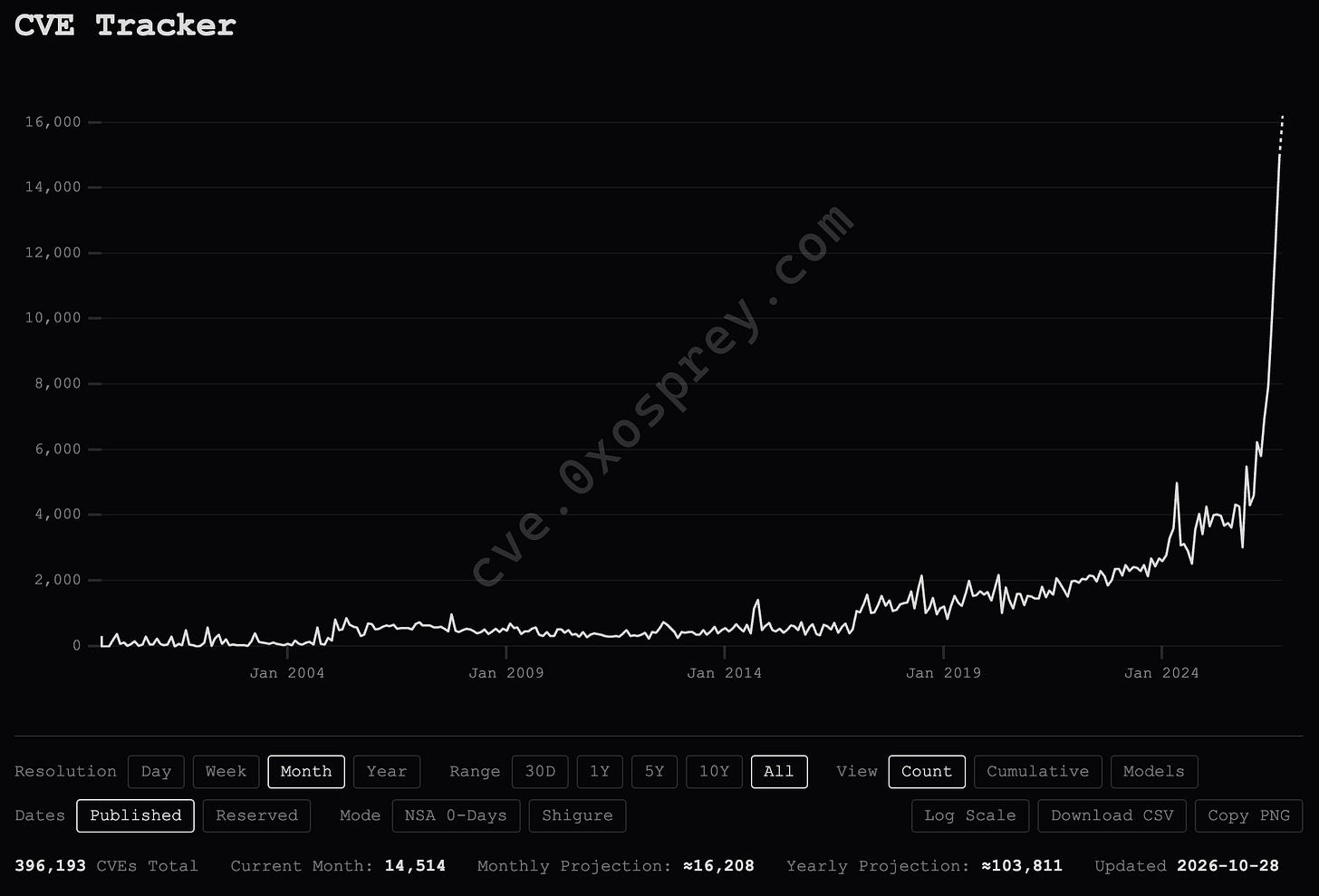
Lambert says he is not a cyber expert and has “very high error bars” on his prediction about which models are finding vulnerabilities. The article does not establish whether open models are being used in near-term attacks or whether an attacker will use them to cause mass harm to public institutions. The article refers to a plot of cyber exploits and damage over but does not analyze the plot’s scale or causes.
Open question
What evidence will show whether open models are materially contributing to cyberattacks, rather than broader AI diffusion and existing ecosystem trends?
Source-stated
Lambert argues that an open-weight release of Claude Mythos would likely have increased cybersecurity incidents without creating a step change in risk.
If Claude Mythos was accidentally released as open-weight, it seems like the world would have been more or less fine. Yes, there would be a clear increase in cybersecurity incidents
Source-stated
Lambert qualifies his earlier use of “fine”: he says the transition will be expensive and difficult, and that the word undersells the turbulence for people who did not expect it.
I’m not sure fine is the right word to describe what is inevitably coming – a forced industry update to a new way of working with software, which will clearly be expensive and accompanied by some hard work.
Source-stated
Lambert says finding a vulnerability alone does not complete the process needed to cause harm; the Firefox example also required an attacker to plant a website targeting the exploit.
Here, the exploit is in Firefox, and a would-be hacker needs to plant a website that is looking for this exploit. This is doable, and could have serious consequences, but just finding the exploit is only one step in a multi-stage process.
Source-stated
Lambert suspects closed models are finding most vulnerabilities, but says his confidence is limited and that recent hacks involved closed models more than open models.
Where I sit, I expect most of these vulnerabilities are being found by closed models, but I have very high error bars on this prediction.
Source-stated
Lambert frames the broader issue as AI capabilities and diffusion across cybersecurity, rather than open versus closed models alone.
All of this I think is way more about AI’s capabilities and diffusion generally than anything about open vs. closed models.
Source-stated
Lambert says there is little evidence showing that open models are to blame for recent cyber incidents.
When talking to people who are close to the AI community, especially AI safety, I find a lot of effort going into figuring out if open models are to blame, which we still have extremely low evidence for.
Source and contributor context
Nathan Lambert · Article author
These are credits stated by the source; they do not establish a profile match or authorship of every passage.
Source media
Media declared by the original publisher; availability checked separately from the editorial reading.
Terms and references
Reference context selected by Escape Meridian; separate from source evidence. Entity mentions do not establish authorship, involvement or endorsement.
Open weights
A model whose trained numbers are published so others can download, run and inspect it; the license and training data may still be restricted.
Nathan Lambert
Research-informed interpretation of model progress, training and limits; explicit alternative to runaway-superintelligence assumptions.
Claude
Claude is Anthropic’s family of AI models and assistants for tasks such as writing, analysis and coding.
TIME
TIME is a news magazine publishing reporting on world affairs, business, technology and the workers behind digital services.
Editorial provenance
Version 1. Publication ID: f3d92ef6-f4c5-4202-8b41-ca2fb8aaf4c9.
Prepared by gpt-6-luna; grounding review by gpt-6-luna.
Source check: uncertain by anthropic/claude-opus-5.5 on 2026-11-13T18:32:14.688Z. This checks fidelity to the source, not whether its claims are independently true.
Editorial selection: accept; reasons: useful_perspective.
Observation: 7fb985ca8aaad0a8d9c9eb10ea888499b6e818975553a0f583158b0e105afe8e. Source text hash: 33557ec546518a34baeef00edb24b91ab7f0e9d128fbe372652b9ed38dabdd1c.
Revision and source-check history
Version 1 · 2026-11-13T18:32:14.688Z
Nathan Lambert: Was I wrong about open models & cyber risks?
revisits his view that an release of Mythos would have increased cybersecurity incidents but not caused a step change in risk. He says recent vulnerability disclosures make him nervous about calling that outcome “fine”: companies face an expensive, difficult shift in how they work with software, though he thinks people can patch immediate problems. Lambert argues that finding a vulnerability is only one step toward harm; attackers also need to exploit it, and their resources and business processes shape what they do. He suspects most vulnerabilities are being found by closed models, but emphasizes that his evidence is weak and that recent hacks involved closed models more than open models. For him, the broader issue is AI capabilities and diffusion across a cyber ecosystem already seeing rising exploits and damage—not open versus closed models alone. He leaves open whether open models are being used in near-term attacks and whether attackers will use them to cause mass harm to public institutions.
Original source
Interconnects AI · Article
Source details
Original source date: Oct 30, 2026 (2026-10-30T17:36:56+00:00).
Date basis: Date stated by the publisher.
Added to Escape Meridian: 2026-11-13T18:32:14.688Z. First observed: 2026-10-30T17:40:27.605Z. Retrieved: 2026-11-02T00:16:48.898Z.
Limits
Lambert says he is not a cyber expert and has “very high error bars” on his prediction about which models are finding vulnerabilities. The article does not establish whether open models are being used in near-term attacks or whether an attacker will use them to cause mass harm to public institutions. The article refers to a plot of cyber exploits and damage over but does not analyze the plot’s scale or causes.
Open question
What evidence will show whether open models are materially contributing to cyberattacks, rather than broader AI diffusion and existing ecosystem trends?
Source-stated
Lambert argues that an open-weight release of Claude Mythos would likely have increased cybersecurity incidents without creating a step change in risk.
If Claude Mythos was accidentally released as open-weight, it seems like the world would have been more or less fine. Yes, there would be a clear increase in cybersecurity incidents
Source-stated
Lambert qualifies his earlier use of “fine”: he says the transition will be expensive and difficult, and that the word undersells the turbulence for people who did not expect it.
I’m not sure fine is the right word to describe what is inevitably coming – a forced industry update to a new way of working with software, which will clearly be expensive and accompanied by some hard work.
Source-stated
Lambert says finding a vulnerability alone does not complete the process needed to cause harm; the Firefox example also required an attacker to plant a website targeting the exploit.
Here, the exploit is in Firefox, and a would-be hacker needs to plant a website that is looking for this exploit. This is doable, and could have serious consequences, but just finding the exploit is only one step in a multi-stage process.
Source-stated
Lambert suspects closed models are finding most vulnerabilities, but says his confidence is limited and that recent hacks involved closed models more than open models.
Where I sit, I expect most of these vulnerabilities are being found by closed models, but I have very high error bars on this prediction.
Source-stated
Lambert frames the broader issue as AI capabilities and diffusion across cybersecurity, rather than open versus closed models alone.
All of this I think is way more about AI’s capabilities and diffusion generally than anything about open vs. closed models.
Source-stated
Lambert says there is little evidence showing that open models are to blame for recent cyber incidents.
When talking to people who are close to the AI community, especially AI safety, I find a lot of effort going into figuring out if open models are to blame, which we still have extremely low evidence for.
Source and contributor context
Nathan Lambert · Article author
These are credits stated by the source; they do not establish a profile match or authorship of every passage.
Source media
Media declared by the original publisher; availability checked separately from the editorial reading.
Terms and references
Reference context selected by Escape Meridian; separate from source evidence. Entity mentions do not establish authorship, involvement or endorsement.
Open weights
A model whose trained numbers are published so others can download, run and inspect it; the license and training data may still be restricted.
Nathan Lambert
Research-informed interpretation of model progress, training and limits; explicit alternative to runaway-superintelligence assumptions.
Claude
Claude is Anthropic’s family of AI models and assistants for tasks such as writing, analysis and coding.
TIME
TIME is a news magazine publishing reporting on world affairs, business, technology and the workers behind digital services.
Editorial provenance
Version 1. Publication ID: f3d92ef6-f4c5-4202-8b41-ca2fb8aaf4c9.
Prepared by gpt-6-luna; grounding review by gpt-6-luna.
Source check: uncertain by anthropic/claude-opus-5.5 on 2026-11-13T18:32:14.688Z. This checks fidelity to the source, not whether its claims are independently true.
Editorial selection: accept; reasons: useful_perspective.
Observation: 7fb985ca8aaad0a8d9c9eb10ea888499b6e818975553a0f583158b0e105afe8e. Source text hash: 33557ec546518a34baeef00edb24b91ab7f0e9d128fbe372652b9ed38dabdd1c.
uncertain · 2026-11-13T18:32:14.688Z · anthropic/claude-opus-5.5
Publication: f3d92ef6-f4c5-4202-8b41-ca2fb8aaf4c9
attribution — pass: The reading correctly attributes the essay and its arguments to Nathan Lambert. Quoted views from others, such as the threat-actor tweet and the Saxe/Hughes ecosystem perspective, are not presented as Lambert's original claims.
Was I wrong about open models & cyber risks? Nathan Lambert
summary — uncertain: Two gaps. First, the summary says Lambert is nervous about calling the outcome fine, but it drops his answer to the title question: he largely still stands by the view. It also drops his claim that fear-mongers made a falsifiable prediction that is set up to be wrong. Smallest repair: add that he largely stands by the earlier take while conceding nervousness and giving more credit to reasonable safety voices. Second, central terms are unexplained for lay readers: open-weight, closed models, and what Claude Mythos and GLM-5.3 are. These need brief explanations or tooltips.
I largely still stand by my above writing a few weeks ago, but I’m nervous about it. I’m not a cyber expert
date — pass: The originalPublished value of 2026-10-30 matches the article's byline date, and the feed timestamp is the same. No earlier first publication is indicated.
Nathan Lambert Oct 30, 2026
support — pass: Each claim's excerpt supports it, including the hedged step-change claim, the qualification of the word fine, the multi-stage Firefox exploit, the high error bars, the framing around AI capability and diffusion, and the low evidence of open-model blame. Lambert does state that closed models played a larger part in recent hacks. The limitations and the question follow from the evidence without inventing stakes.
Closed models have played a very heavy part in the recent hacks, at least more than open models have.
media — pass: The selected media is the verified direct link to the original Interconnects article, which is the most direct way to reach the source.
Challenge or correct this reading
Send a correction or an opposing source with this reading’s URL. Disagreement and uncertainty can remain unresolved.
Research-informed interpretation of model progress, training and limits; explicit alternative to runaway-superintelligence assumptions.
Explore Nathan LambertResearch-informed interpretation of model progress, training and limits; explicit alternative to runaway-superintelligence assumptions.
Explore Nathan LambertA model whose trained numbers are published so others can download, run and inspect it; the license and training data may still be restricted.
Definition referenceClaude is Anthropic’s family of AI models and assistants for tasks such as writing, analysis and coding.
Explore ClaudeTIME is a news magazine publishing reporting on world affairs, business, technology and the workers behind digital services.
Explore TIMEResearch-informed interpretation of model progress, training and limits; explicit alternative to runaway-superintelligence assumptions.
Explore Nathan LambertA model whose trained numbers are published so others can download, run and inspect it; the license and training data may still be restricted.
Definition referenceClaude is Anthropic’s family of AI models and assistants for tasks such as writing, analysis and coding.
Explore ClaudeTIME is a news magazine publishing reporting on world affairs, business, technology and the workers behind digital services.
Explore TIME