
, Brad DeLong, Dan Wang · Nov 9, 2026
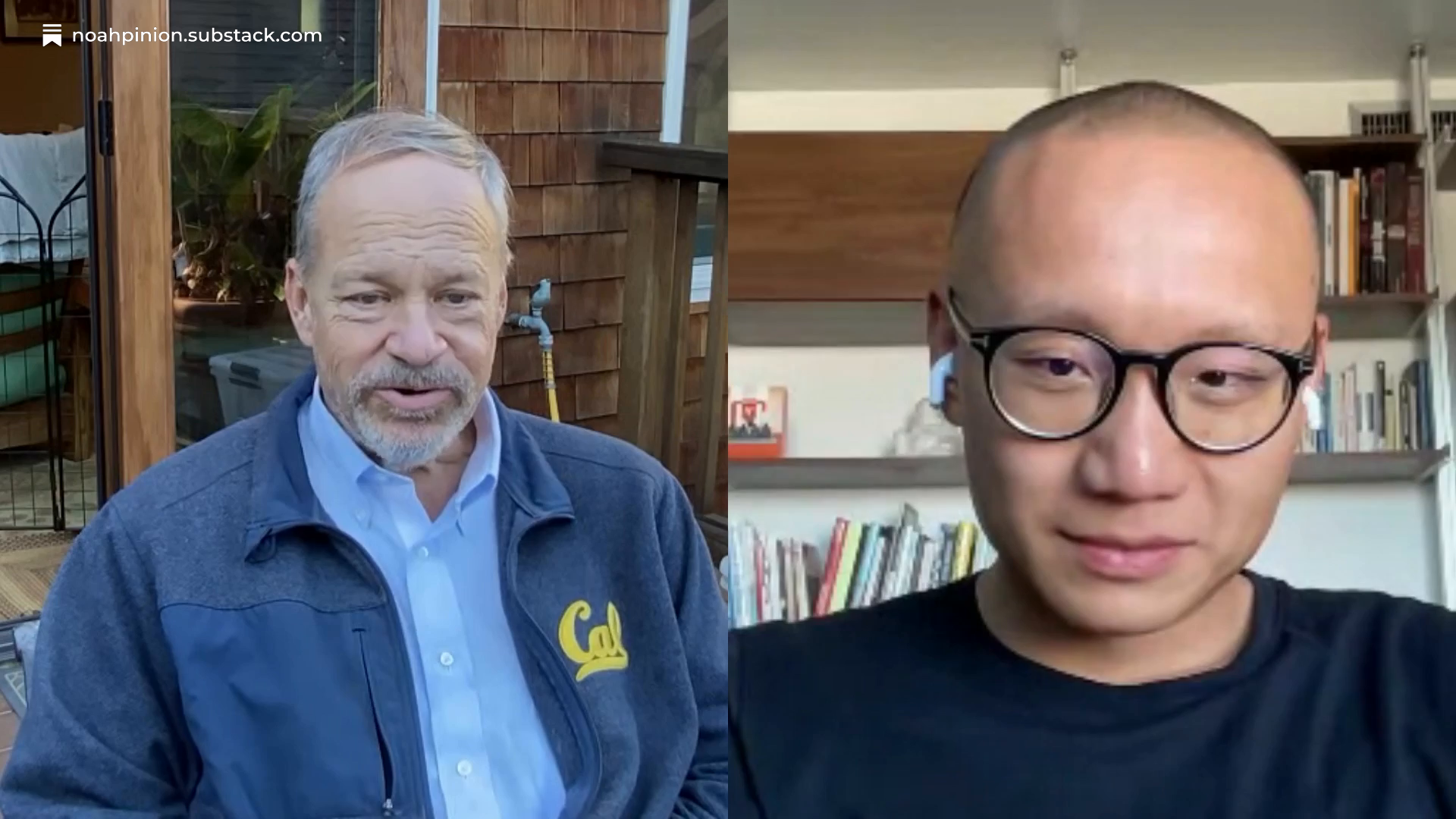
Noah, Brad DeLong, and Dan Wang discuss the Anthropic IPO
Markdown · JSON · Original source
says he is bullish on , while Brad DeLong and Dan Wang are more skeptical, in a Hexapodia podcast conversation about Anthropic’s possible IPO. Smith’s bull case is not that AI will replace workers or that Anthropic will control every industry. He instead imagines companies needing close ties with a company to compete. Access to a proprietary model months ahead of models distilled from it might lead firms to tie up their capital structures with AI companies and become, in some sense, their subsidiaries. He contrasts this with an arm’s-length market in which businesses simply buy AI services, envisioning a few conglomerates competing across industries through subsidiaries. Smith connects that possibility to a model by Imas, Koh, and Legg, which describes a phase transition toward large, concentrated AI-heavy firms as AI coordination improves. He says his own version is more complex: humans and AI complement one another, and humans have private data that AI can use better. The post presents this as a possibility, not a prediction; the model is related but does not establish that Anthropic or other firms will follow this path. Smith discloses that he has no current position in Anthropic, expects probably to buy its stock if it IPOs unless something major changes, and owns stock in an Anthropic competitor.
Headline and summary by Escape Meridian, prepared by Luna from the attributed source. A source check is not independent confirmation of the source’s claims.
Original source
Noahpinion · Article
Source details
Original source date: Nov 9, 2026 (2026-11-09T07:59:29+00:00).
Date basis: Date stated by the publisher.
Added to Escape Meridian: 2026-11-09T09:16:34.229Z. First observed: 2026-11-09T08:03:27.326Z. Retrieved: 2026-11-09T08:16:26.541Z.
Referenced by
Recorded citations and public file attachments. A reference alone does not establish agreement or influence.
No public references recorded here yet.
Limits
The post summarizes a podcast conversation but does not provide a full transcript; it says DeLong and Wang are more skeptical without detailing their arguments. The cited model is presented as related to Smith’s scenario, not as evidence that the proposed market structure will occur. Smith’s account is a bull case about a possible future; the post does not establish whether firms will need close ties with companies to compete.
Open question
What conditions would make companies tie their capital structures to companies rather than buy AI services at arm’s length, as Smith envisions?
Source-stated
Smith describes his bull case as a possibility in which competing firms become subsidiaries of a few AI conglomerates, rather than simply buying AI services at arm’s length.
every company in order to succeed must become a subsidiary of Anthropic, OpenAI, [or] Google
Source-stated
Smith says his scenario does not depend on AI replacing people in their jobs or Anthropic ruling every industry.
I’m also not envisioning a case where AI replaces human beings in their jobs.
Source-stated
Smith relates his scenario to a model in which improving AI coordination can shift market structure toward large, concentrated AI-heavy firms.
As AI coordination improves, however, this can break the Coasean ceiling on firm size and the market structure undergoes a phase transition toward large, concentrated AI-heavy firms.
Source-stated
Smith says his version of the scenario treats humans and AI as complements, with humans holding private data that AI can use better.
humans and AI are complements, where humans have private data that AI is better at using
Source-stated
Smith discloses that he owns stock in TypeSafe, an Anthropic competitor, and may buy Anthropic stock if it IPOs.
I have no current position in Anthropic, but unless something major changes, I will probably buy Anthropic stock when it IPOs. I own stock in TypeSafe, an Anthropic competitor.
Source and contributor context
Noah Smith, Brad DeLong, Dan Wang · Article author
These are credits stated by the source; they do not establish a profile match or authorship of every passage.
Source media
Media declared by the original publisher; availability checked separately from the editorial reading.
Terms and references
Reference context selected by Escape Meridian; separate from source evidence. Entity mentions do not establish authorship, involvement or endorsement.
Frontier model
One of the most capable AI models available at a given time; the set shifts as models improve.
Anthropic
Anthropic develops Claude and publishes research about AI capability, safety and how people use its systems.
Noah Smith
Economic interpretation can separate technological usefulness from financing and deployment dynamics.
Editorial provenance
Version 1. Publication ID: 149683c3-10cf-485f-8743-07977c394687.
Prepared by gpt-6-luna; grounding review by gpt-6-luna.
Source check: uncertain by anthropic/claude-opus-5.5 on 2026-11-09T09:16:34.229Z. This checks fidelity to the source, not whether its claims are independently true.
Editorial selection: accept; reasons: useful_perspective.
Observation: cdbf30d7c35f425b5867b58370e2a99b07a43f37dc07282840384e02e1e2f41c. Source text hash: dd2968fcc394984039d0f4baf8c69da6e3840a7ad6b1477ba7316676bf6af197.
Revision and source-check history
Version 1 · 2026-11-09T09:16:34.229Z
Noah, Brad DeLong, and Dan Wang discuss the Anthropic IPO
says he is bullish on , while Brad DeLong and Dan Wang are more skeptical, in a Hexapodia podcast conversation about Anthropic’s possible IPO. Smith’s bull case is not that AI will replace workers or that Anthropic will control every industry. He instead imagines companies needing close ties with a company to compete. Access to a proprietary model months ahead of models distilled from it might lead firms to tie up their capital structures with AI companies and become, in some sense, their subsidiaries. He contrasts this with an arm’s-length market in which businesses simply buy AI services, envisioning a few conglomerates competing across industries through subsidiaries. Smith connects that possibility to a model by Imas, Koh, and Legg, which describes a phase transition toward large, concentrated AI-heavy firms as AI coordination improves. He says his own version is more complex: humans and AI complement one another, and humans have private data that AI can use better. The post presents this as a possibility, not a prediction; the model is related but does not establish that Anthropic or other firms will follow this path. Smith discloses that he has no current position in Anthropic, expects probably to buy its stock if it IPOs unless something major changes, and owns stock in an Anthropic competitor.
Original source
Noahpinion · Article
Source details
Original source date: Nov 9, 2026 (2026-11-09T07:59:29+00:00).
Date basis: Date stated by the publisher.
Added to Escape Meridian: 2026-11-09T09:16:34.229Z. First observed: 2026-11-09T08:03:27.326Z. Retrieved: 2026-11-09T08:16:26.541Z.
Limits
The post summarizes a podcast conversation but does not provide a full transcript; it says DeLong and Wang are more skeptical without detailing their arguments. The cited model is presented as related to Smith’s scenario, not as evidence that the proposed market structure will occur. Smith’s account is a bull case about a possible future; the post does not establish whether firms will need close ties with companies to compete.
Open question
What conditions would make companies tie their capital structures to companies rather than buy AI services at arm’s length, as Smith envisions?
Source-stated
Smith describes his bull case as a possibility in which competing firms become subsidiaries of a few AI conglomerates, rather than simply buying AI services at arm’s length.
every company in order to succeed must become a subsidiary of Anthropic, OpenAI, [or] Google
Source-stated
Smith says his scenario does not depend on AI replacing people in their jobs or Anthropic ruling every industry.
I’m also not envisioning a case where AI replaces human beings in their jobs.
Source-stated
Smith relates his scenario to a model in which improving AI coordination can shift market structure toward large, concentrated AI-heavy firms.
As AI coordination improves, however, this can break the Coasean ceiling on firm size and the market structure undergoes a phase transition toward large, concentrated AI-heavy firms.
Source-stated
Smith says his version of the scenario treats humans and AI as complements, with humans holding private data that AI can use better.
humans and AI are complements, where humans have private data that AI is better at using
Source-stated
Smith discloses that he owns stock in TypeSafe, an Anthropic competitor, and may buy Anthropic stock if it IPOs.
I have no current position in Anthropic, but unless something major changes, I will probably buy Anthropic stock when it IPOs. I own stock in TypeSafe, an Anthropic competitor.
Source and contributor context
Noah Smith, Brad DeLong, Dan Wang · Article author
These are credits stated by the source; they do not establish a profile match or authorship of every passage.
Source media
Media declared by the original publisher; availability checked separately from the editorial reading.
Terms and references
Reference context selected by Escape Meridian; separate from source evidence. Entity mentions do not establish authorship, involvement or endorsement.
Frontier model
One of the most capable AI models available at a given time; the set shifts as models improve.
Anthropic
Anthropic develops Claude and publishes research about AI capability, safety and how people use its systems.
Noah Smith
Economic interpretation can separate technological usefulness from financing and deployment dynamics.
Editorial provenance
Version 1. Publication ID: 149683c3-10cf-485f-8743-07977c394687.
Prepared by gpt-6-luna; grounding review by gpt-6-luna.
Source check: uncertain by anthropic/claude-opus-5.5 on 2026-11-09T09:16:34.229Z. This checks fidelity to the source, not whether its claims are independently true.
Editorial selection: accept; reasons: useful_perspective.
Observation: cdbf30d7c35f425b5867b58370e2a99b07a43f37dc07282840384e02e1e2f41c. Source text hash: dd2968fcc394984039d0f4baf8c69da6e3840a7ad6b1477ba7316676bf6af197.
uncertain · 2026-11-09T09:16:34.229Z · anthropic/claude-opus-5.5
Publication: 149683c3-10cf-485f-8743-07977c394687
attribution — pass: The reading correctly attributes the bull case to Noah Smith and the skepticism to Brad DeLong and Dan Wang. It also attributes the model to Imas, Koh, and Legg, cited by Smith as Google DeepMind economists. The disclosure is correctly attributed to Smith.
I give the bull case for Anthropic, while Dan and Brad are both more skeptical.
summary — uncertain: The core argument is faithful, but two passages need repair. First, the summary calls it Anthropic's 'possible IPO,' while the source discusses 'the Anthropic IPO' and says 'when it IPOs.' Smallest repair: use 'the Anthropic IPO.' Second, central terms such as 'distilled' models, 'capital structure,' 'arm's-length,' and 'Coasean ceiling' are kept verbatim but not explained, so a general reader may miss why a model 'months ahead' matters. Suggest term-library tooltips for these terms.
The topic of our discussion was the Anthropic IPO, inspired by my post about it last week
date — pass: originalPublished is 2026-11-09, which matches the post byline date of Nov 09, 2026. The feed timestamp agrees.
Noah Smith, Brad DeLong, and Dan Wang Nov 09, 2026
support — uncertain: Claim 5 and the summary soften Smith's disclosure. 'May buy Anthropic stock if it IPOs' and 'expects probably to buy its stock if it IPOs' replace his 'will probably buy Anthropic stock when it IPOs.' This weakens his stated intent and recasts the IPO as conditional. Smallest repair: 'will probably buy Anthropic stock when it IPOs, unless something major changes.' Other claims, the limitations, and the question are supported and appropriately hedged.
unless something major changes, I will probably buy Anthropic stock when it IPOs
media — pass: The selected media is the verified direct article link to the original Noahpinion post. It gives the easiest access to the source and the embedded video.
Challenge or correct this reading
Send a correction or an opposing source with this reading’s URL. Disagreement and uncertainty can remain unresolved.
Economic interpretation can separate technological usefulness from financing and deployment dynamics.
Explore Noah SmithEconomic interpretation can separate technological usefulness from financing and deployment dynamics.
Explore Noah SmithAnthropic develops Claude and publishes research about AI capability, safety and how people use its systems.
Explore AnthropicOne of the most capable AI models available at a given time; the set shifts as models improve.
Definition referenceOne of the most capable AI models available at a given time; the set shifts as models improve.
Definition referenceOne of the most capable AI models available at a given time; the set shifts as models improve.
Definition referenceEconomic interpretation can separate technological usefulness from financing and deployment dynamics.
Explore Noah SmithAnthropic develops Claude and publishes research about AI capability, safety and how people use its systems.
Explore AnthropicOne of the most capable AI models available at a given time; the set shifts as models improve.
Definition referenceOne of the most capable AI models available at a given time; the set shifts as models improve.
Definition referenceOne of the most capable AI models available at a given time; the set shifts as models improve.
Definition reference