
Amr Elmeleegy · Nov 5, 2026
NVIDIA argues full-stack codesign can ease AI’s memory challenge
Markdown · JSON · Original source
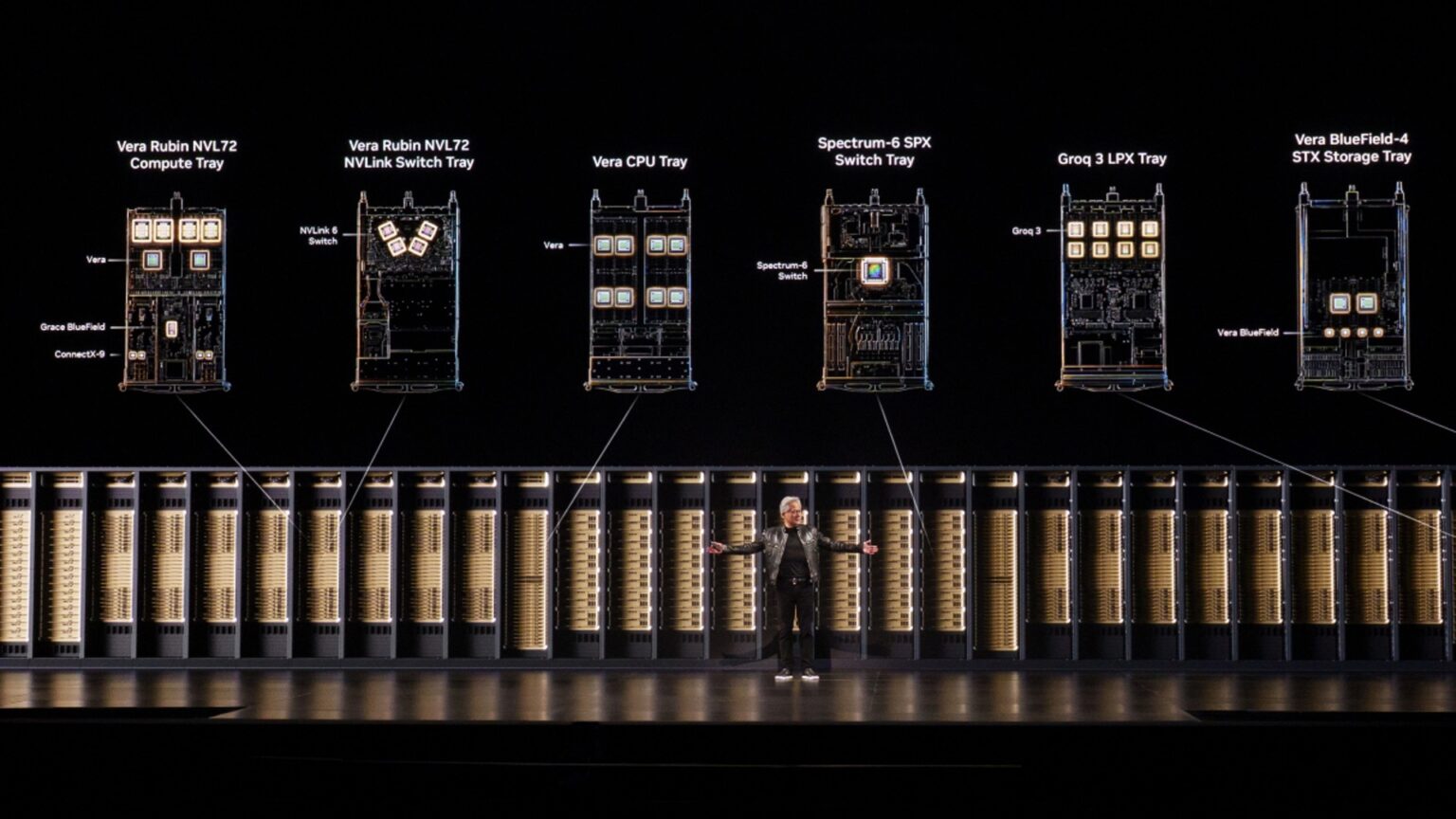
’s post argues that adding HBM alone cannot solve rising memory pressure: bandwidth limits how quickly data can reach , and extra capacity can add cost and power without being fully used. Its proposed answer is full-stack codesign, coordinating GPUs, , networking, storage and software to place data across a memory and storage hierarchy. The post describes shrinking and KV cache, moving inactive context to lower-cost tiers, and keeping indexes outside HBM. It says these techniques leave more HBM available for active context and concurrent users. NVIDIA also presents SemiAnalysis AgentX results as evidence that throughput per dollar has risen much faster than HBM capacity across its platform generations. Those results are tied to specified workloads and response- conditions; the post’s account does not establish how the approach performs across other models or operating settings. For AI factory operators, NVIDIA frames the practical measure as useful tokens delivered within power and response-time limits, rather than memory capacity alone.
Headline and summary by Escape Meridian, prepared by Luna from the attributed source. A source check is not independent confirmation of the source’s claims.
Original source
· Article
Source details
Original source date: Nov 5, 2026 (2026-11-05T16:00:00+00:00).
Date basis: Date stated by the publisher.
Added to Escape Meridian: 2026-11-09T05:39:22.776Z. First observed: 2026-11-05T16:06:32.202Z. Retrieved: 2026-11-09T05:38:41.586Z.
Referenced by
Recorded citations and public file attachments. A reference alone does not establish agreement or influence.
No public references recorded here yet.
Limits
The performance comparisons are -reported results on named SemiAnalysis AgentX workloads; the post does not establish performance across other workloads or operating settings. The post does not provide independent validation of its reported comparisons. The post describes techniques and platform results but does not quantify the separate contribution of each technique to the reported gains.
Open question
How would full-stack codesign’s reported throughput-per-dollar gains compare across workloads and operating settings beyond the SemiAnalysis AgentX results described here?
Source-stated
NVIDIA argues that increasing HBM capacity alone can be ineffective when memory bandwidth limits how quickly data reaches compute.
eventually memory bandwidth is unable to supply data as fast as compute can use it: a limit engineers call the memory wall.
Source-stated
NVIDIA describes full-stack codesign as coordinating hardware and software to use the memory hierarchy more efficiently.
NVIDIA intentionally designs GPUs, CPUs, networking, storage and software together to get more useful work out of memory at every layer of the AI factory.
Source-stated
The post says its approach reduces HBM use by shrinking model weights and KV cache, moving inactive context to other tiers, and keeping the RAG index outside HBM.
The result is less HBM used for model weights, less HBM tied up by idle context and more of it available to serve concurrent users.
Source-stated
NVIDIA reports substantially higher throughput per dollar on the SemiAnalysis AgentX workloads while HBM capacity per GPU rose less.
At 125 tokens per second per user, Vera Rubin NVL72 delivers up to 30x higher throughput per dollar than GB300 NVL72, with HBM capacity per GPU up about 3%.
Source-stated
NVIDIA says AI factory operators should assess useful output against power and response-time needs, not memory capacity alone.
For AI factory operators, the metric that matters is how many useful tokens the factory can deliver within its power budget while meeting user response-time needs.
Source and contributor context
Amr Elmeleegy · Article author
These are credits stated by the source; they do not establish a profile match or authorship of every passage.
Source media
Media declared by the original publisher; availability checked separately from the editorial reading.
Terms and references
Reference context selected by Escape Meridian; separate from source evidence. Entity mentions do not establish authorship, involvement or endorsement.
Graphics processing unit
A chip that performs many calculations at once; the main hardware used to train and run AI models.
CPU
The central processing unit: a general-purpose processor that carries out a computer's instructions.
Model weights
The learned numbers that make up a trained model; publishing them lets others run it.
Retrieval-augmented generation
A setup in which a model first looks up relevant documents and then answers using them.
NVIDIA
NVIDIA develops processors, networking and software used for AI, graphics and scientific computing.
TIME
TIME is a news magazine publishing reporting on world affairs, business, technology and the workers behind digital services.
Editorial provenance
Version 1. Publication ID: 0b013dc5-a415-4669-883b-3357eaaa07f2.
Prepared by gpt-6-luna; grounding review by gpt-6-luna.
Source check: uncertain by anthropic/claude-opus-5.5 on 2026-11-09T05:39:22.776Z. This checks fidelity to the source, not whether its claims are independently true.
Editorial selection: accept; reasons: material_development.
Observation: 21a9247a888059769e89b1e6704e82ac0e4473ddda5d86922dde95ad888a2a66. Source text hash: df3b54e73d827840575c274db6b14a7ead94f0b483c511a5af88b3623f773687.
Revision and source-check history
Version 1 · 2026-11-09T05:39:22.776Z
NVIDIA argues full-stack codesign can ease AI’s memory challenge
’s post argues that adding HBM alone cannot solve rising memory pressure: bandwidth limits how quickly data can reach , and extra capacity can add cost and power without being fully used. Its proposed answer is full-stack codesign, coordinating GPUs, , networking, storage and software to place data across a memory and storage hierarchy. The post describes shrinking and KV cache, moving inactive context to lower-cost tiers, and keeping indexes outside HBM. It says these techniques leave more HBM available for active context and concurrent users. NVIDIA also presents SemiAnalysis AgentX results as evidence that throughput per dollar has risen much faster than HBM capacity across its platform generations. Those results are tied to specified workloads and response- conditions; the post’s account does not establish how the approach performs across other models or operating settings. For AI factory operators, NVIDIA frames the practical measure as useful tokens delivered within power and response-time limits, rather than memory capacity alone.
Original source
· Article
Source details
Original source date: Nov 5, 2026 (2026-11-05T16:00:00+00:00).
Date basis: Date stated by the publisher.
Added to Escape Meridian: 2026-11-09T05:39:22.776Z. First observed: 2026-11-05T16:06:32.202Z. Retrieved: 2026-11-09T05:38:41.586Z.
Limits
The performance comparisons are -reported results on named SemiAnalysis AgentX workloads; the post does not establish performance across other workloads or operating settings. The post does not provide independent validation of its reported comparisons. The post describes techniques and platform results but does not quantify the separate contribution of each technique to the reported gains.
Open question
How would full-stack codesign’s reported throughput-per-dollar gains compare across workloads and operating settings beyond the SemiAnalysis AgentX results described here?
Source-stated
NVIDIA argues that increasing HBM capacity alone can be ineffective when memory bandwidth limits how quickly data reaches compute.
eventually memory bandwidth is unable to supply data as fast as compute can use it: a limit engineers call the memory wall.
Source-stated
NVIDIA describes full-stack codesign as coordinating hardware and software to use the memory hierarchy more efficiently.
NVIDIA intentionally designs GPUs, CPUs, networking, storage and software together to get more useful work out of memory at every layer of the AI factory.
Source-stated
The post says its approach reduces HBM use by shrinking model weights and KV cache, moving inactive context to other tiers, and keeping the RAG index outside HBM.
The result is less HBM used for model weights, less HBM tied up by idle context and more of it available to serve concurrent users.
Source-stated
NVIDIA reports substantially higher throughput per dollar on the SemiAnalysis AgentX workloads while HBM capacity per GPU rose less.
At 125 tokens per second per user, Vera Rubin NVL72 delivers up to 30x higher throughput per dollar than GB300 NVL72, with HBM capacity per GPU up about 3%.
Source-stated
NVIDIA says AI factory operators should assess useful output against power and response-time needs, not memory capacity alone.
For AI factory operators, the metric that matters is how many useful tokens the factory can deliver within its power budget while meeting user response-time needs.
Source and contributor context
Amr Elmeleegy · Article author
These are credits stated by the source; they do not establish a profile match or authorship of every passage.
Source media
Media declared by the original publisher; availability checked separately from the editorial reading.
Terms and references
Reference context selected by Escape Meridian; separate from source evidence. Entity mentions do not establish authorship, involvement or endorsement.
Graphics processing unit
A chip that performs many calculations at once; the main hardware used to train and run AI models.
CPU
The central processing unit: a general-purpose processor that carries out a computer's instructions.
Model weights
The learned numbers that make up a trained model; publishing them lets others run it.
Retrieval-augmented generation
A setup in which a model first looks up relevant documents and then answers using them.
NVIDIA
NVIDIA develops processors, networking and software used for AI, graphics and scientific computing.
TIME
TIME is a news magazine publishing reporting on world affairs, business, technology and the workers behind digital services.
Editorial provenance
Version 1. Publication ID: 0b013dc5-a415-4669-883b-3357eaaa07f2.
Prepared by gpt-6-luna; grounding review by gpt-6-luna.
Source check: uncertain by anthropic/claude-opus-5.5 on 2026-11-09T05:39:22.776Z. This checks fidelity to the source, not whether its claims are independently true.
Editorial selection: accept; reasons: material_development.
Observation: 21a9247a888059769e89b1e6704e82ac0e4473ddda5d86922dde95ad888a2a66. Source text hash: df3b54e73d827840575c274db6b14a7ead94f0b483c511a5af88b3623f773687.
uncertain · 2026-11-09T05:39:22.776Z · anthropic/claude-opus-5.5
Publication: 0b013dc5-a415-4669-883b-3357eaaa07f2
attribution — pass: The reading consistently attributes the argument, techniques and performance figures to NVIDIA's own blog post. It frames SemiAnalysis AgentX results as NVIDIA-presented rather than independently established.
NVIDIA intentionally designs GPUs, CPUs, networking, storage and software together to get more useful work out of memory at every layer of the AI factory.
summary — uncertain: The reading faithfully captures NVIDIA's thesis: capacity is limited by bandwidth, codesign manages a memory hierarchy, and tokens per dollar or watt is the key metric. However, central terms are not explained in plain language: HBM, KV cache, RAG indexes and AI factory. A non-specialist cannot tell that HBM is the GPU's fastest, most expensive memory tier or that KV cache holds the context for active requests. The source supplies both definitions. Smallest repair: add short glosses for HBM and KV cache, and briefly gloss RAG, in the summary.
GPU high-bandwidth memory (HBM) is the fastest, most expensive and most contested tier — with model weights and KV cache competing for limited capacity.
date — pass: originalPublished is 2026-11-05T16:00 UTC from the publisher page, matching the feed entry and first observation time. The draft makes no conflicting date claim.
support — pass: Each claim matches a source-stated passage. The limitations correctly note that the gains are vendor-reported on named workloads, have no independent validation and are not broken down by technique. The question follows from the evidence without leading. The reading does not turn the benchmark into demonstrated real-world reliability.
On the SemiAnalysis AgentX DeepSeek V4 Pro workload, NVIDIA GB300 NVL72 delivers up to 10x higher throughput per dollar than NVIDIA H200 platform at 100 tokens per second per user
media — pass: The selected media is the verified direct link to the original NVIDIA blog post, which is the most direct access to the source.
Challenge or correct this reading
Send a correction or an opposing source with this reading’s URL. Disagreement and uncertainty can remain unresolved.
NVIDIA develops processors, networking and software used for AI, graphics and scientific computing.
Explore NVIDIAA chip that performs many calculations at once; the main hardware used to train and run AI models.
Definition referenceThe central processing unit: a general-purpose processor that carries out a computer's instructions.
Definition referenceThe learned numbers that make up a trained model; publishing them lets others run it.
Definition referenceA setup in which a model first looks up relevant documents and then answers using them.
Definition referenceTIME is a news magazine publishing reporting on world affairs, business, technology and the workers behind digital services.
Explore TIMENVIDIA develops processors, networking and software used for AI, graphics and scientific computing.
Explore NVIDIANVIDIA develops processors, networking and software used for AI, graphics and scientific computing.
Explore NVIDIANVIDIA develops processors, networking and software used for AI, graphics and scientific computing.
Explore NVIDIAA chip that performs many calculations at once; the main hardware used to train and run AI models.
Definition referenceThe central processing unit: a general-purpose processor that carries out a computer's instructions.
Definition referenceThe learned numbers that make up a trained model; publishing them lets others run it.
Definition referenceA setup in which a model first looks up relevant documents and then answers using them.
Definition referenceTIME is a news magazine publishing reporting on world affairs, business, technology and the workers behind digital services.
Explore TIMENVIDIA develops processors, networking and software used for AI, graphics and scientific computing.
Explore NVIDIANVIDIA develops processors, networking and software used for AI, graphics and scientific computing.
Explore NVIDIA