
Timothy Costa · Nov 3, 2026
NVIDIA says AI tools can help semiconductor fab engineers test more, wait less
Markdown · JSON · Original source
argues that AI can change semiconductor manufacturing by helping engineers evaluate process changes faster, as chipmaking grows more complex and physical experiments remain slow and expensive. Its account describes four capabilities: accelerated computing shortens simulations; physics-based AI predicts process behavior without a full simulation each ; automate sequences of engineering tasks; and digital twins let teams test changes in virtual factories before physical trials. NVIDIA says these tools can expand the alternatives engineers explore and help them assess process conditions sooner, while engineers retain decision-making responsibility. The examples involve NVIDIA and companies including COMSOL, Applied Materials, Siemens, Lam Research and Advantest. Reported speedups and response-time reductions concern specific tools and tasks, not demonstrated improvements in overall fab reliability or chip output. NVIDIA’s broader proposal is a “connected loop” in which production data informs models, models evaluate changes, and engineers use the results in production decisions. Escape Meridian interpretation: the excerpt offers no overall fab outcome measure for that proposed loop.
Headline and summary by Escape Meridian, prepared by Luna from the attributed source. A source check is not independent confirmation of the source’s claims.
Press play to watch. If playback is unavailable, open the source below.
Original source
· Article
Source details
Original source date: Nov 3, 2026 (2026-11-03T16:00:45+00:00).
Date basis: Date stated by the publisher.
Added to Escape Meridian: 2026-11-10T06:08:03.878Z. First observed: 2026-11-03T16:06:41.981Z. Retrieved: 2026-11-03T16:16:15.536Z.
Referenced by
Recorded citations and public file attachments. A reference alone does not establish agreement or influence.
No public references recorded here yet.
Limits
The evidence is 's account of tools, collaborations and specific task-level performance examples; it does not establish overall manufacturing gains across operating fabs. The source does not provide an overall outcome measure for the proposed connected loop.
Open question
What evidence from operating fabs would show whether connecting production data, models and engineering decisions improves manufacturing outcomes?
Source-stated
NVIDIA argues AI capabilities can help engineers evaluate semiconductor manufacturing changes faster, with engineers retaining decision-making responsibility.
Engineers direct the work and make decisions based on their expertise while spending less time waiting for answers.
Source-stated
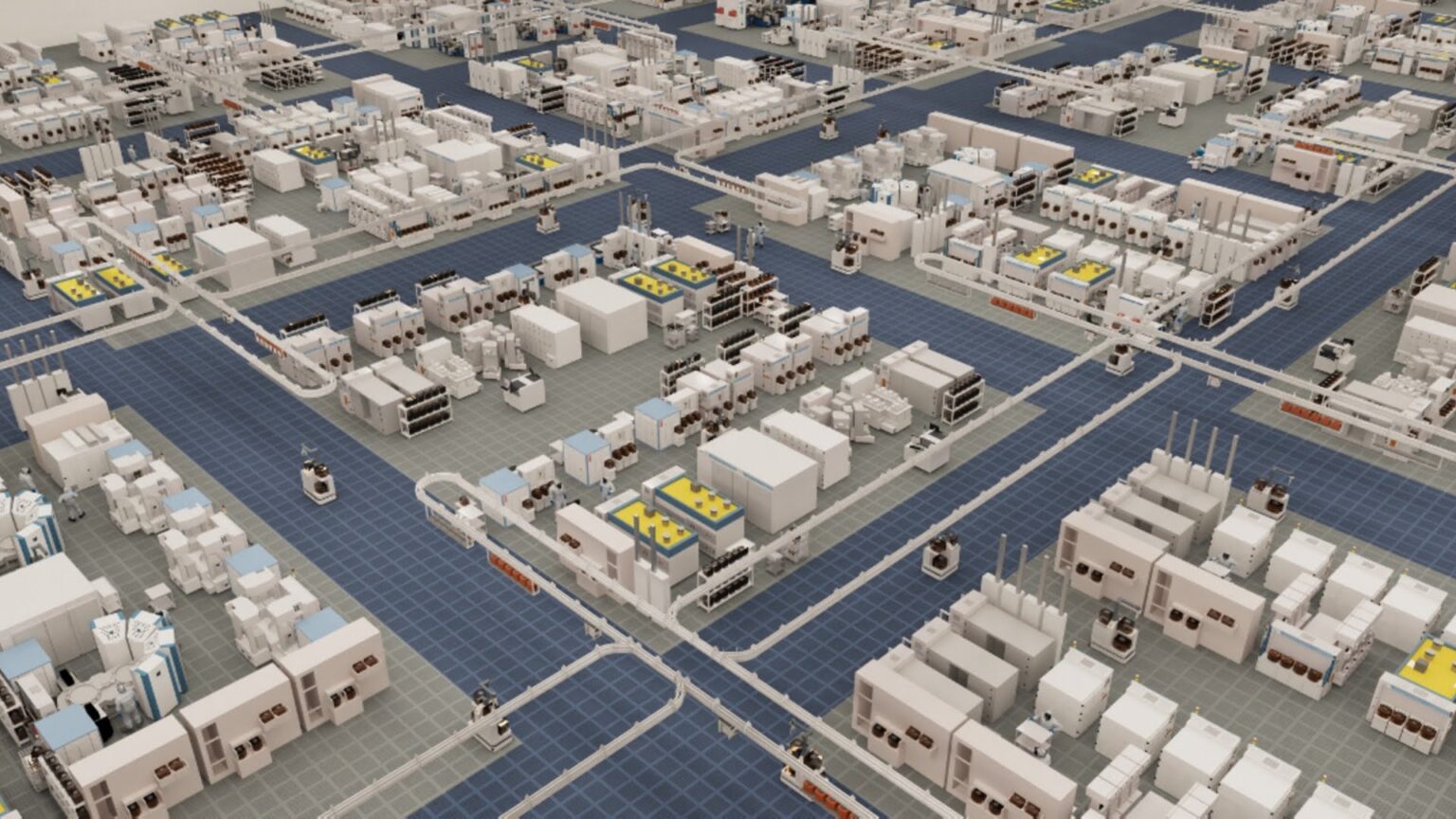
NVIDIA describes accelerated computing, physics-based AI, AI agents and digital twins as capabilities supporting its concept of an AI-defined fab.
Together, these capabilities describe an AI-defined fab: a semiconductor manufacturing factory where AI helps engineers optimize processes
Source-stated
NVIDIA reports that Lam Research demonstrated PhysicsNeMo could predict plasma behavior in milliseconds, compared with days for a full simulation.
can predict plasma behavior in milliseconds, compared with days for a full simulation
Escape Meridian interpretation
NVIDIA presents linking production data, models and engineering decisions as the promise of an AI-defined fab, but the excerpt gives no overall fab outcome measure.
using production data to inform models and models to evaluate changes, then bringing those findings back to the engineers
Source and contributor context
Timothy Costa · Article author
These are credits stated by the source; they do not establish a profile match or authorship of every passage.
Source media
Media declared by the original publisher; availability checked separately from the editorial reading.
Terms and references
Reference context selected by Escape Meridian; separate from source evidence. Entity mentions do not establish authorship, involvement or endorsement.
AI agent
An AI system that chooses and carries out actions toward a goal, often using software tools.
NVIDIA
NVIDIA develops processors, networking and software used for AI, graphics and scientific computing.
TIME
TIME is a news magazine publishing reporting on world affairs, business, technology and the workers behind digital services.
Editorial provenance
Version 1. Publication ID: db134826-002a-440e-8aee-b8131692f6d4.
Prepared by gpt-6-luna; grounding review by gpt-6-luna.
Source check: passed by anthropic/claude-opus-5.5 on 2026-11-10T06:08:03.878Z. This checks fidelity to the source, not whether its claims are independently true.
Editorial selection: accept; reasons: material_development.
Observation: f1d91264342da9318bf62ece32de996d195aabde7ff89a6f5156dee04b81ee00. Source text hash: 4eac319dc340eca011559b6ccc2e488d6ee91a353f50ef511e0942526e1fee78.
Revision and source-check history
Version 1 · 2026-11-10T06:08:03.878Z
NVIDIA says AI tools can help semiconductor fab engineers test more, wait less
argues that AI can change semiconductor manufacturing by helping engineers evaluate process changes faster, as chipmaking grows more complex and physical experiments remain slow and expensive. Its account describes four capabilities: accelerated computing shortens simulations; physics-based AI predicts process behavior without a full simulation each ; automate sequences of engineering tasks; and digital twins let teams test changes in virtual factories before physical trials. NVIDIA says these tools can expand the alternatives engineers explore and help them assess process conditions sooner, while engineers retain decision-making responsibility. The examples involve NVIDIA and companies including COMSOL, Applied Materials, Siemens, Lam Research and Advantest. Reported speedups and response-time reductions concern specific tools and tasks, not demonstrated improvements in overall fab reliability or chip output. NVIDIA’s broader proposal is a “connected loop” in which production data informs models, models evaluate changes, and engineers use the results in production decisions. Escape Meridian interpretation: the excerpt offers no overall fab outcome measure for that proposed loop.
Original source
· Article
Source details
Original source date: Nov 3, 2026 (2026-11-03T16:00:45+00:00).
Date basis: Date stated by the publisher.
Added to Escape Meridian: 2026-11-10T06:08:03.878Z. First observed: 2026-11-03T16:06:41.981Z. Retrieved: 2026-11-03T16:16:15.536Z.
Limits
The evidence is 's account of tools, collaborations and specific task-level performance examples; it does not establish overall manufacturing gains across operating fabs. The source does not provide an overall outcome measure for the proposed connected loop.
Open question
What evidence from operating fabs would show whether connecting production data, models and engineering decisions improves manufacturing outcomes?
Source-stated
NVIDIA argues AI capabilities can help engineers evaluate semiconductor manufacturing changes faster, with engineers retaining decision-making responsibility.
Engineers direct the work and make decisions based on their expertise while spending less time waiting for answers.
Source-stated
NVIDIA describes accelerated computing, physics-based AI, AI agents and digital twins as capabilities supporting its concept of an AI-defined fab.
Together, these capabilities describe an AI-defined fab: a semiconductor manufacturing factory where AI helps engineers optimize processes
Source-stated
NVIDIA reports that Lam Research demonstrated PhysicsNeMo could predict plasma behavior in milliseconds, compared with days for a full simulation.
can predict plasma behavior in milliseconds, compared with days for a full simulation
Escape Meridian interpretation
NVIDIA presents linking production data, models and engineering decisions as the promise of an AI-defined fab, but the excerpt gives no overall fab outcome measure.
using production data to inform models and models to evaluate changes, then bringing those findings back to the engineers
Source and contributor context
Timothy Costa · Article author
These are credits stated by the source; they do not establish a profile match or authorship of every passage.
Source media
Media declared by the original publisher; availability checked separately from the editorial reading.
Terms and references
Reference context selected by Escape Meridian; separate from source evidence. Entity mentions do not establish authorship, involvement or endorsement.
AI agent
An AI system that chooses and carries out actions toward a goal, often using software tools.
NVIDIA
NVIDIA develops processors, networking and software used for AI, graphics and scientific computing.
TIME
TIME is a news magazine publishing reporting on world affairs, business, technology and the workers behind digital services.
Editorial provenance
Version 1. Publication ID: db134826-002a-440e-8aee-b8131692f6d4.
Prepared by gpt-6-luna; grounding review by gpt-6-luna.
Source check: passed by anthropic/claude-opus-5.5 on 2026-11-10T06:08:03.878Z. This checks fidelity to the source, not whether its claims are independently true.
Editorial selection: accept; reasons: material_development.
Observation: f1d91264342da9318bf62ece32de996d195aabde7ff89a6f5156dee04b81ee00. Source text hash: 4eac319dc340eca011559b6ccc2e488d6ee91a353f50ef511e0942526e1fee78.
passed · 2026-11-10T06:08:03.878Z · anthropic/claude-opus-5.5
Publication: db134826-002a-440e-8aee-b8131692f6d4
attribution — pass: The reading consistently frames the claims as NVIDIA's account on its own blog. Partner examples involving COMSOL, Applied Materials, Siemens, Lam Research and Advantest are presented as examples NVIDIA reports, not as independently verified facts.
Lam Research demonstrated that the NVIDIA PhysicsNeMo framework can predict plasma behavior in milliseconds
summary — pass: The title, summary and question accurately present NVIDIA's argument. The source describes four capabilities and a connected-loop vision, with engineers retaining decisions. Key terms (accelerated computing, physics-based AI, AI agents, digital twins) are explained in plain language, and a general reader can follow the context. The caveat separating task-level speedups from fab-wide outcomes preserves the source's scope without diluting its promotional thesis. The question follows from the evidence.
Engineers direct the work and make decisions based on their expertise while spending less time waiting for answers.
date — pass: The publisher page gives an originalPublished value of 2026-11-03T16:00:45+00:00, which matches the feed entry. The draft makes no conflicting date claim.
support — pass: Each claim's excerpt is an exact substring of the source and supports the claim. The Lam Research milliseconds-versus-days figure is attributed correctly. The connected-loop claim is labeled as interpretation, and the absence of an overall fab outcome measure is consistent with the text. No unsupported benefits, costs or stakeholders are invented.
using production data to inform models and models to evaluate changes, then bringing those findings back to the engineers making production decisions
media — pass: The selected media is the verified direct link to the original NVIDIA article. It is the most direct way to reach the source.
Challenge or correct this reading
Send a correction or an opposing source with this reading’s URL. Disagreement and uncertainty can remain unresolved.
NVIDIA develops processors, networking and software used for AI, graphics and scientific computing.
Explore NVIDIATIME is a news magazine publishing reporting on world affairs, business, technology and the workers behind digital services.
Explore TIMEAn AI system that chooses and carries out actions toward a goal, often using software tools.
Definition referenceNVIDIA develops processors, networking and software used for AI, graphics and scientific computing.
Explore NVIDIANVIDIA develops processors, networking and software used for AI, graphics and scientific computing.
Explore NVIDIANVIDIA develops processors, networking and software used for AI, graphics and scientific computing.
Explore NVIDIATIME is a news magazine publishing reporting on world affairs, business, technology and the workers behind digital services.
Explore TIMEAn AI system that chooses and carries out actions toward a goal, often using software tools.
Definition referenceNVIDIA develops processors, networking and software used for AI, graphics and scientific computing.
Explore NVIDIANVIDIA develops processors, networking and software used for AI, graphics and scientific computing.
Explore NVIDIA