· Nov 19, 2026
OpenAI’s Performance Factory automates performance-regression work
Markdown · JSON · Original source
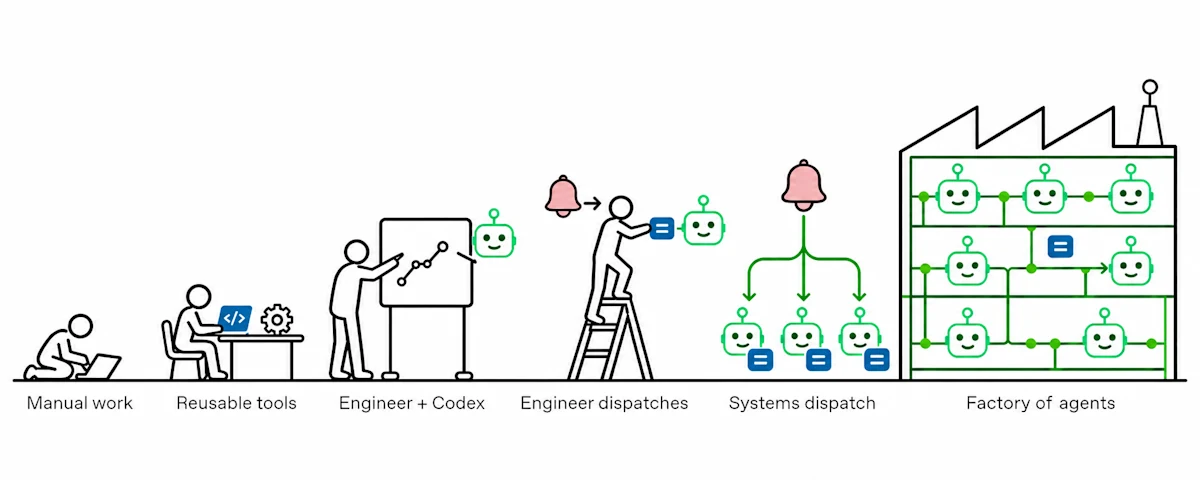
Technical Staff members Okay Zed and Cyrus Forbes describe the Performance Factory, where Codex agents investigate performance alerts, propose fixes, and check whether performance recovers after deployment. The authors report that its Regression Workflow tracked more than 1,700 investigations and root caused over 600 cases in just over three months. Engineers still review and deploy proposed fixes; agents check the result and can send unresolved slowdowns back for investigation. The authors trace a shift from manual investigations, to engineers working with Codex, to reusable skills and automated workflows. They say agents sometimes settle on plausible but wrong diagnoses, so a separate Codex session challenges proposed causes. In a manual review of 100 root cause suggestions, they graded 70% as accurate; 30% needed refinement or did not fully establish causality. Fixes can be more complicated than necessary or introduce new issues, and some require engineers to weigh tradeoffs. The authors evaluate investigations against past incidents and assess whether task summaries help engineers understand findings. They are working on synthetic performance tests to measure proposed fixes before engineer review, and on finding slowdowns that alerts miss. They are also exploring whether agents could eventually ship some low-risk fixes without a human in the loop.
Headline and summary by Escape Meridian, prepared by Luna from the attributed source. A source check is not independent confirmation of the source’s claims.
Original source
· Article
Source details
Original source date: Nov 19, 2026 (2026-11-19T08:00:00.000Z).
Date basis: Date supplied by the publisher’s feed.
Added to Escape Meridian: 2026-11-21T17:46:59.025Z. First observed: 2026-11-19T17:43:01.492Z. Retrieved: 2026-11-21T17:45:56.904Z.
Referenced by
Recorded citations in public readings. A reference alone does not establish agreement or influence.
No public references recorded here yet.
Limits
The reported accuracy comes from a manual review of 100 root cause suggestions; the article does not present it as a measure of overall real-world reliability. The authors describe synthetic performance tests, proactive monitoring, and possible agent-led shipping of low-risk fixes as work in progress, not demonstrated outcomes.
Open question
What results will the synthetic performance tests produce when used to measure and revise agent-proposed fixes before engineer review?
Source-stated
OpenAI Technical Staff members Okay Zed and Cyrus Forbes say the Performance Factory automates performance-regression work, from investigating alerts to proposing fixes and checking recovery after deployment.
The Performance Factory, which runs in the cloud and automates investigating and resolving performance problems
Source-stated
The authors report that the Regression Workflow tracked more than 1,700 investigations and root caused over 600 cases in just over three months.
In just over three months, the Regression Workflow tracked more than 1,700 investigations and root caused over 600 cases.
Source-stated
The authors added a separate Codex session to challenge proposed diagnoses after some agents stopped at plausible explanations that proved wrong.
To catch these mistakes, we added an adversarial review: a separate Codex session that tries to disprove the proposed diagnosis.
Source-stated
In a manual review of 100 root cause suggestions, the authors graded 70% accurate, while 30% needed refinement or did not fully establish causality.
In a manual review of 100 root cause suggestions, we graded 70% as accurate, with 30% needing further refinement or not fully establishing causality.
Source-stated
The authors say proposed fixes can be unnecessarily complicated or introduce new issues; engineers review and decide whether to merge them.
we’ve seen cases where the agent-proposed changes are more complicated than necessary or introduce new issues.
Source-stated
The authors are working on synthetic performance tests to measure proposed fixes and revise them before engineer review.
We’re also working on using synthetic performance tests so agents can measure proposed fixes and revise them before asking an engineer for review.
Source and contributor context
OpenAI · Publisher
The publisher is identified here. No individual author has been inferred.
Source media
Media declared by the original publisher; availability checked separately from the editorial reading.
Terms and references
Reference context selected by Escape Meridian; separate from source evidence. Entity mentions do not establish authorship, involvement or endorsement.
OpenAI
OpenAI develops AI models and products and publishes research, release announcements and evaluations.
Figure
Figure develops humanoid robots and publishes its own tests of how they perform physical tasks.
Editorial provenance
Version 1. Publication ID: 10095054-8779-4e72-87a3-fbb90bb3d54f.
Prepared by gpt-6-luna; grounding review by gpt-6-luna.
Source check: uncertain by anthropic/claude-opus-5.5 on 2026-11-21T17:46:59.025Z. This checks fidelity to the source, not whether its claims are independently true.
Editorial selection: accept; reasons: useful_perspective.
Observation: c3b2e9af66f55a659066239466a753f5d58992d349eac4a254903084f2c334cc. Source text hash: 2e5b367c12f5cf12343d510200b15d610a59f4bf9e155b00218d6a5d3d75da55.
Revision and source-check history
Version 1 · 2026-11-21T17:46:59.025Z
OpenAI’s Performance Factory automates performance-regression work
Technical Staff members Okay Zed and Cyrus Forbes describe the Performance Factory, where Codex agents investigate performance alerts, propose fixes, and check whether performance recovers after deployment. The authors report that its Regression Workflow tracked more than 1,700 investigations and root caused over 600 cases in just over three months. Engineers still review and deploy proposed fixes; agents check the result and can send unresolved slowdowns back for investigation. The authors trace a shift from manual investigations, to engineers working with Codex, to reusable skills and automated workflows. They say agents sometimes settle on plausible but wrong diagnoses, so a separate Codex session challenges proposed causes. In a manual review of 100 root cause suggestions, they graded 70% as accurate; 30% needed refinement or did not fully establish causality. Fixes can be more complicated than necessary or introduce new issues, and some require engineers to weigh tradeoffs. The authors evaluate investigations against past incidents and assess whether task summaries help engineers understand findings. They are working on synthetic performance tests to measure proposed fixes before engineer review, and on finding slowdowns that alerts miss. They are also exploring whether agents could eventually ship some low-risk fixes without a human in the loop.
Original source
· Article
Source details
Original source date: Nov 19, 2026 (2026-11-19T08:00:00.000Z).
Date basis: Date supplied by the publisher’s feed.
Added to Escape Meridian: 2026-11-21T17:46:59.025Z. First observed: 2026-11-19T17:43:01.492Z. Retrieved: 2026-11-21T17:45:56.904Z.
Limits
The reported accuracy comes from a manual review of 100 root cause suggestions; the article does not present it as a measure of overall real-world reliability. The authors describe synthetic performance tests, proactive monitoring, and possible agent-led shipping of low-risk fixes as work in progress, not demonstrated outcomes.
Open question
What results will the synthetic performance tests produce when used to measure and revise agent-proposed fixes before engineer review?
Source-stated
OpenAI Technical Staff members Okay Zed and Cyrus Forbes say the Performance Factory automates performance-regression work, from investigating alerts to proposing fixes and checking recovery after deployment.
The Performance Factory, which runs in the cloud and automates investigating and resolving performance problems
Source-stated
The authors report that the Regression Workflow tracked more than 1,700 investigations and root caused over 600 cases in just over three months.
In just over three months, the Regression Workflow tracked more than 1,700 investigations and root caused over 600 cases.
Source-stated
The authors added a separate Codex session to challenge proposed diagnoses after some agents stopped at plausible explanations that proved wrong.
To catch these mistakes, we added an adversarial review: a separate Codex session that tries to disprove the proposed diagnosis.
Source-stated
In a manual review of 100 root cause suggestions, the authors graded 70% accurate, while 30% needed refinement or did not fully establish causality.
In a manual review of 100 root cause suggestions, we graded 70% as accurate, with 30% needing further refinement or not fully establishing causality.
Source-stated
The authors say proposed fixes can be unnecessarily complicated or introduce new issues; engineers review and decide whether to merge them.
we’ve seen cases where the agent-proposed changes are more complicated than necessary or introduce new issues.
Source-stated
The authors are working on synthetic performance tests to measure proposed fixes and revise them before engineer review.
We’re also working on using synthetic performance tests so agents can measure proposed fixes and revise them before asking an engineer for review.
Source and contributor context
OpenAI · Publisher
The publisher is identified here. No individual author has been inferred.
Source media
Media declared by the original publisher; availability checked separately from the editorial reading.
Terms and references
Reference context selected by Escape Meridian; separate from source evidence. Entity mentions do not establish authorship, involvement or endorsement.
OpenAI
OpenAI develops AI models and products and publishes research, release announcements and evaluations.
Figure
Figure develops humanoid robots and publishes its own tests of how they perform physical tasks.
Editorial provenance
Version 1. Publication ID: 10095054-8779-4e72-87a3-fbb90bb3d54f.
Prepared by gpt-6-luna; grounding review by gpt-6-luna.
Source check: uncertain by anthropic/claude-opus-5.5 on 2026-11-21T17:46:59.025Z. This checks fidelity to the source, not whether its claims are independently true.
Editorial selection: accept; reasons: useful_perspective.
Observation: c3b2e9af66f55a659066239466a753f5d58992d349eac4a254903084f2c334cc. Source text hash: 2e5b367c12f5cf12343d510200b15d610a59f4bf9e155b00218d6a5d3d75da55.
uncertain · 2026-11-21T17:46:59.025Z · anthropic/claude-opus-5.5
Publication: 10095054-8779-4e72-87a3-fbb90bb3d54f
attribution — pass: The draft correctly attributes the article to OpenAI's Okay Zed and Cyrus Forbes, Members of Technical Staff. It keeps the reported figures and plans attributed to the authors rather than presenting them as established facts.
By Okay Zed and Cyrus Forbes, Members of Technical Staff
summary — uncertain: The mechanics are accurate, but the reading leaves out the authors' central argument for why this matters. They say agent-driven development now moves so fast that traditional performance work cannot keep up, so performance systems must become autonomous. Without that, the summary reads as a feature list. Smallest repair: add one attributed sentence stating that thesis. Also gloss Codex in plain words as OpenAI's coding agent, and regression as a slowdown after a change.
The staggering pace of agentic development has made traditional approaches to performance engineering unsustainable.
date — pass: The originalPublished value, 2026-11-19, matches the article's own dateline. No earlier publication is indicated.
November 19, 2026
support — pass: Every claim matches a verbatim source passage: the 1,700 investigations and 600 root causes, the adversarial review, the 70% figure, the fix problems, engineer review, synthetic tests and low-risk shipping. The limitations correctly frame the 70% figure and future plans. The question follows from stated work in progress without asserting an outcome.
We’re also exploring how agents could use our other agentic review tools to identify low-risk changes and eventually ship those fixes without a human in the loop.
media — pass: The selected media is the verified direct link to the original OpenAI article, which is the most direct way to access the source.
Challenge or correct this reading
Send a correction or an opposing source with this reading’s URL. Disagreement and uncertainty can remain unresolved.
OpenAI develops AI models and products and publishes research, release announcements and evaluations.
Explore OpenAIOpenAI develops AI models and products and publishes research, release announcements and evaluations.
Explore OpenAIOpenAI develops AI models and products and publishes research, release announcements and evaluations.
Explore OpenAIFigure develops humanoid robots and publishes its own tests of how they perform physical tasks.
Explore FigureOpenAI develops AI models and products and publishes research, release announcements and evaluations.
Explore OpenAIOpenAI develops AI models and products and publishes research, release announcements and evaluations.
Explore OpenAIFigure develops humanoid robots and publishes its own tests of how they perform physical tasks.
Explore Figure