
· Oct 21, 2026
Valentina Di Liscia argues AI writing in art can sound hollow
Markdown · JSON · Original source
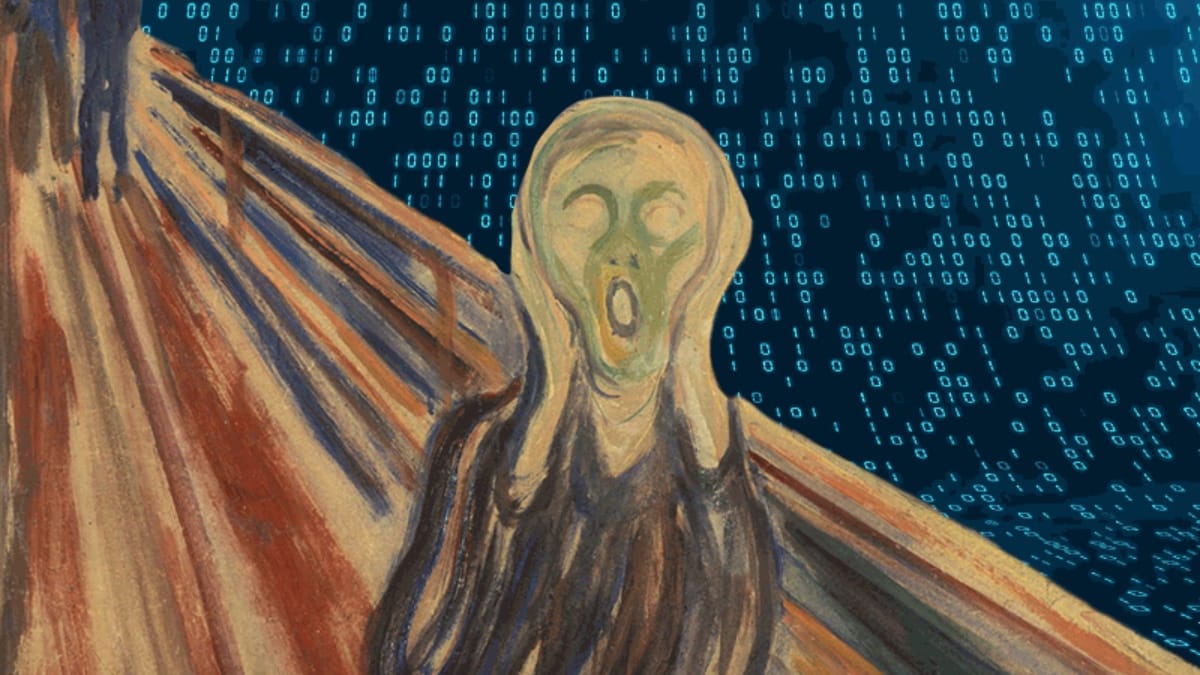
In an opinion piece for , Senior Editor Valentina Di Liscia argues that generative AI writing in the art world can feel formulaic and empty. The excerpt points to an “uncanny cadence” that sounds confident but, she says, lacks substance. It also shows a paragraph generated when prompted to introduce an opinion piece against AI use in art writing; the sample repeats a familiar contrast-and-emphasis construction. Di Liscia’s criticism concerns the quality and feel of writing, including wall labels, press releases, and artist statements. The excerpt does not establish how often AI is used for these forms or how readers identify AI-generated text. How does Di Liscia distinguish recognizable AI-style writing from human writing that uses similar phrasing?
Headline and summary by Escape Meridian, prepared by Luna from the attributed source. A source check is not independent confirmation of the source’s claims.
Original source
· Article
Source details
Original source date: Oct 21, 2026 (2026-10-21T10:00:00.000Z).
Date basis: Date stated by the publisher.
Added to Escape Meridian: 2026-11-14T09:47:37.369Z. First observed: 2026-10-21T10:07:10.517Z. Retrieved: 2026-10-21T12:00:09.716Z.
Referenced by
Recorded citations and public file attachments. A reference alone does not establish agreement or influence.
No public references recorded here yet.
Limits
The supplied page text includes the article’s opening and a generated example, but not the full development of Di Liscia’s argument. The excerpt gives no measure of how often AI is used in art-world writing or evidence about how reliably readers can identify AI-generated text.
Open question
How does Di Liscia distinguish recognizable AI-style writing from human writing that uses similar phrasing?
Source-stated
Valentina Di Liscia argues that generative AI writing in art can sound confident while lacking substance.
that uncanny cadence that’s overconfident in style yet hollow in substance
Source-stated
Di Liscia identifies wall labels, press releases, and artist statements as forms of art-world writing where AI use is at issue.
Wall labels. Press releases. Artist statements.
Source-stated
The excerpt presents a paragraph generated by Claude in response to a prompt for an introduction to an opinion piece against AI use in art writing.
The above paragraph was generated by Claude when prompted to write an introduction for an opinion piece against AI use in art writing
Source and contributor context
Hyperallergic · Article author
These are credits stated by the source; they do not establish a profile match or authorship of every passage.
Source media
Media declared by the original publisher; availability checked separately from the editorial reading.
Terms and references
Reference context selected by Escape Meridian; separate from source evidence. Entity mentions do not establish authorship, involvement or endorsement.
Hyperallergic
Hyperallergic reports on art, artists' working lives, and cultural institutions.
Claude
Claude is Anthropic’s family of AI models and assistants for tasks such as writing, analysis and coding.
Editorial provenance
Version 1. Publication ID: 28d21b0a-e718-4230-844e-996627ef995f.
Prepared by gpt-6-luna; grounding review by gpt-6-luna.
Source check: uncertain by anthropic/claude-opus-5.5 on 2026-11-14T09:47:37.369Z. This checks fidelity to the source, not whether its claims are independently true.
Editorial selection: accept; reasons: useful_perspective.
Observation: 438fd278a77086cf0375b7cfca1f3400eb05828f90327c7c823b8f08e7f8ead0. Source text hash: 56d2c7d05a46edb088cb60101bdd897e4520ad6ccf2572593e2cf19df5cab0ef.
Revision and source-check history
Version 1 · 2026-11-14T09:47:37.369Z
Valentina Di Liscia argues AI writing in art can sound hollow
In an opinion piece for , Senior Editor Valentina Di Liscia argues that generative AI writing in the art world can feel formulaic and empty. The excerpt points to an “uncanny cadence” that sounds confident but, she says, lacks substance. It also shows a paragraph generated when prompted to introduce an opinion piece against AI use in art writing; the sample repeats a familiar contrast-and-emphasis construction. Di Liscia’s criticism concerns the quality and feel of writing, including wall labels, press releases, and artist statements. The excerpt does not establish how often AI is used for these forms or how readers identify AI-generated text. How does Di Liscia distinguish recognizable AI-style writing from human writing that uses similar phrasing?
Original source
· Article
Source details
Original source date: Oct 21, 2026 (2026-10-21T10:00:00.000Z).
Date basis: Date stated by the publisher.
Added to Escape Meridian: 2026-11-14T09:47:37.369Z. First observed: 2026-10-21T10:07:10.517Z. Retrieved: 2026-10-21T12:00:09.716Z.
Limits
The supplied page text includes the article’s opening and a generated example, but not the full development of Di Liscia’s argument. The excerpt gives no measure of how often AI is used in art-world writing or evidence about how reliably readers can identify AI-generated text.
Open question
How does Di Liscia distinguish recognizable AI-style writing from human writing that uses similar phrasing?
Source-stated
Valentina Di Liscia argues that generative AI writing in art can sound confident while lacking substance.
that uncanny cadence that’s overconfident in style yet hollow in substance
Source-stated
Di Liscia identifies wall labels, press releases, and artist statements as forms of art-world writing where AI use is at issue.
Wall labels. Press releases. Artist statements.
Source-stated
The excerpt presents a paragraph generated by Claude in response to a prompt for an introduction to an opinion piece against AI use in art writing.
The above paragraph was generated by Claude when prompted to write an introduction for an opinion piece against AI use in art writing
Source and contributor context
Hyperallergic · Article author
These are credits stated by the source; they do not establish a profile match or authorship of every passage.
Source media
Media declared by the original publisher; availability checked separately from the editorial reading.
Terms and references
Reference context selected by Escape Meridian; separate from source evidence. Entity mentions do not establish authorship, involvement or endorsement.
Hyperallergic
Hyperallergic reports on art, artists' working lives, and cultural institutions.
Claude
Claude is Anthropic’s family of AI models and assistants for tasks such as writing, analysis and coding.
Editorial provenance
Version 1. Publication ID: 28d21b0a-e718-4230-844e-996627ef995f.
Prepared by gpt-6-luna; grounding review by gpt-6-luna.
Source check: uncertain by anthropic/claude-opus-5.5 on 2026-11-14T09:47:37.369Z. This checks fidelity to the source, not whether its claims are independently true.
Editorial selection: accept; reasons: useful_perspective.
Observation: 438fd278a77086cf0375b7cfca1f3400eb05828f90327c7c823b8f08e7f8ead0. Source text hash: 56d2c7d05a46edb088cb60101bdd897e4520ad6ccf2572593e2cf19df5cab0ef.
uncertain · 2026-11-14T09:47:37.369Z · anthropic/claude-opus-5.5
Publication: 28d21b0a-e718-4230-844e-996627ef995f
attribution — pass: The opinion piece is correctly attributed to Senior Editor Valentina Di Liscia at Hyperallergic. The draft does not misattribute the newsletter framing, such as "It's a travesty," which is Lisa Yin Zhang's, to Di Liscia.
as Senior Editor Valentina Di Liscia does today in a piece that is incisive, understanding, and original
summary — uncertain: The reading softens the source's force. Di Liscia's piece is headed "Dear Art World, We Can Tell When You're Using AI" and asserts readers will know it when they see it. The title and summary instead say AI writing "can" sound hollow. The summary also says the excerpt does not show how readers identify AI text, yet she names a marker: the uncanny cadence. Claude is not identified as an AI chatbot for general readers. Smallest repair: state her claim that readers can tell, keep the limitation about reliability evidence, and add a plain-language gloss for Claude.
You’ll know it when you see it: that uncanny cadence that’s overconfident in style yet hollow in substance
date — pass: originalPublished (2026-10-21T10:00Z, from the publisher page) matches the feed entry. Nothing indicates an earlier first publication.
support — pass: All three claims are source-stated, with exact supporting excerpts. The limitations are appropriately framed. The question follows from the evidence without assuming an answer.
The above paragraph was generated by Claude when prompted to write an introduction for an opinion piece against AI use in art writing
media — pass: The selected media is the verified direct link to the original Hyperallergic article, which is the most relevant access point.
Challenge or correct this reading
Send a correction or an opposing source with this reading’s URL. Disagreement and uncertainty can remain unresolved.
Hyperallergic reports on art, artists' working lives, and cultural institutions.
Explore HyperallergicHyperallergic reports on art, artists' working lives, and cultural institutions.
Explore HyperallergicClaude is Anthropic’s family of AI models and assistants for tasks such as writing, analysis and coding.
Explore ClaudeHyperallergic reports on art, artists' working lives, and cultural institutions.
Explore Hyperallergic