
Sam Bradley, Seb Joseph · Nov 5, 2026
Why Liquid Death’s media chief is determined to break away from LiveRamp
Markdown · JSON · Original source
reporters Sam Bradley and Seb Joseph report that Liquid Death stopped using LiveRamp’s identity graph after about 18 months. An identity graph links activity across screens and sites, helping the brand see which ads were associated with purchases. Chief media officer Benoit Vatere says he fears that customer buying patterns could inform AI tools used by Publicis Groupe, which works for Liquid Death competitors. The deal’s terms prohibit that use, but Vatere doubts those terms will remain unchanged; he says he does not want any holding company that advises competitors to own the data infrastructure. Vatere is seeking an independent provider and wants a contract clause requiring the relationship to end and Liquid Death’s data to be deleted if ownership changes. He says the company cannot build its own graph and cannot do without one right now. The article also reports that alternatives include rival holding-company solutions, Snowflake and Databricks, while analyst Nikhil Lai distinguishes privacy safety from structural neutrality. Ebiquity CEO Ruben Schreurs disagrees that sharing LiveRamp with rival brands necessarily harms a brand’s competitive edge. The article leaves the business impact uncertain: competitors and non-Publicis businesses account for roughly 5% of LiveRamp’s revenue. Whether defections grow enough to change that remains open.
Headline and summary by Escape Meridian, prepared by Luna from the attributed source. A source check is not independent confirmation of the source’s claims.
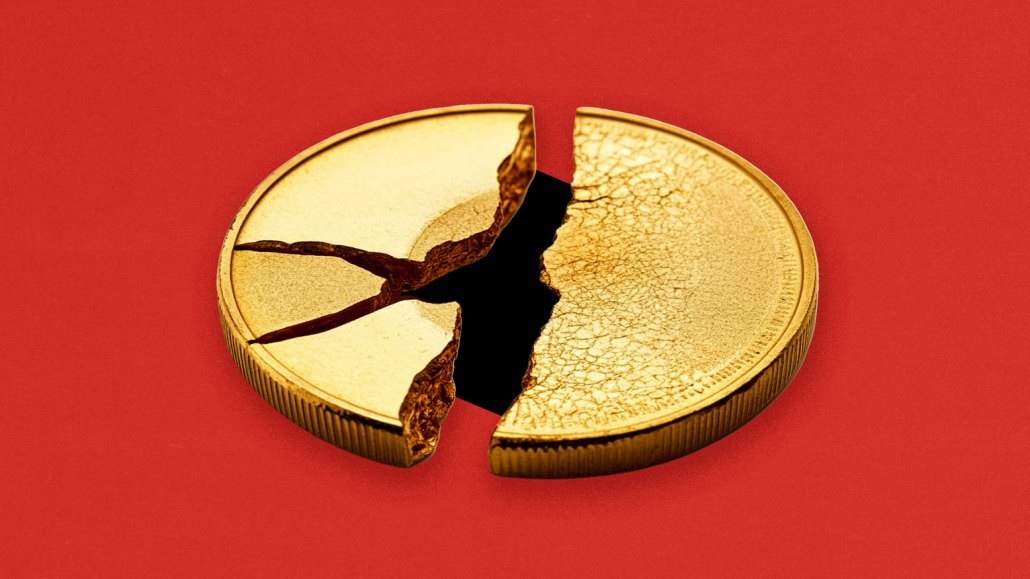
Original source
· Article
Source details
Original source date: Nov 5, 2026 (2026-11-05T16:18:00+00:00).
Date basis: Date stated by the publisher.
Added to Escape Meridian: 2026-11-06T00:53:43.841Z. First observed: 2026-11-05T16:18:25.233Z. Retrieved: 2026-11-06T00:52:48.442Z.
Referenced by
Recorded citations and public file attachments. A reference alone does not establish agreement or influence.
No public references recorded here yet.
Limits
The article reports Vatere’s concerns and expectations; it does not establish that Publicis has used or will use Liquid Death’s data to aid competitors. The article says the material impact on LiveRamp’s business under Publicis remains uncertain; it does not establish what will happen to the company’s revenue or customer relationships.
Open question
Will marketers leave LiveRamp in numbers large enough to materially affect its business under Publicis?
Source-stated
Liquid Death stopped using LiveRamp’s identity graph after about 18 months.
Benoit Vatere has been looking for one since early August, when the beverage brand stopped the identity graph, after about 18 months of usage.
Source-stated
Vatere says he is concerned Publicis could use Liquid Death’s buying patterns in AI tools that inform strategy for competitors.
Vatere worries his patterns could end up in the data the holdco uses to train its AI tools and subsequently help make strategic calls for those rivals.
Source-stated
The article says the deal’s terms prohibit the feared use, while Vatere expects the terms to change.
Granted, the deal’s terms say that can’t happen. But Vatere expects them to change
Source-stated
Vatere wants an ownership-change clause requiring the contract to end and Liquid Death’s data to be deleted.
if there’s change of ownership, change of control, contract out, right? Data deleted, like the whole thing
Source-stated
Schreurs argues that using LiveRamp alongside competitors does not necessarily jeopardize a brand’s edge.
You can absolutely manage things in a way that if [your] agency also works for competing brands, that doesn’t necessarily have to be a problem. The same is true with LiveRamp.
Source-stated
The article says whether defections will materially affect LiveRamp remains uncertain.
Whether marketers like Vatere peel away in big enough numbers to change that sum remains an open question.
Source and contributor context
Sam Bradley, Seb Joseph · Article author
These are credits stated by the source; they do not establish a profile match or authorship of every passage.
Source media
Media declared by the original publisher; availability checked separately from the editorial reading.
Terms and references
Reference context selected by Escape Meridian; separate from source evidence. Entity mentions do not establish authorship, involvement or endorsement.
Digiday
Digiday is a trade publication covering digital media, marketing and advertising businesses.
Editorial provenance
Version 1. Publication ID: c292e03b-7139-4609-8fda-dd7179f40b66.
Prepared by gpt-6-luna; grounding review by gpt-6-luna.
Source check: uncertain by anthropic/claude-opus-5.5 on 2026-11-06T00:53:43.841Z. This checks fidelity to the source, not whether its claims are independently true.
Editorial selection: accept; reasons: useful_perspective.
Observation: 27fe2d37aeb1371805086719056bdfdba495e251fc124a4fb7f80f58b7c28640. Source text hash: 3385dded2826d17027902e46051e9a60f6387cacaceebbcfd337778e54a0d539.
Revision and source-check history
Version 1 · 2026-11-06T00:53:43.841Z
Why Liquid Death’s media chief is determined to break away from LiveRamp
reporters Sam Bradley and Seb Joseph report that Liquid Death stopped using LiveRamp’s identity graph after about 18 months. An identity graph links activity across screens and sites, helping the brand see which ads were associated with purchases. Chief media officer Benoit Vatere says he fears that customer buying patterns could inform AI tools used by Publicis Groupe, which works for Liquid Death competitors. The deal’s terms prohibit that use, but Vatere doubts those terms will remain unchanged; he says he does not want any holding company that advises competitors to own the data infrastructure. Vatere is seeking an independent provider and wants a contract clause requiring the relationship to end and Liquid Death’s data to be deleted if ownership changes. He says the company cannot build its own graph and cannot do without one right now. The article also reports that alternatives include rival holding-company solutions, Snowflake and Databricks, while analyst Nikhil Lai distinguishes privacy safety from structural neutrality. Ebiquity CEO Ruben Schreurs disagrees that sharing LiveRamp with rival brands necessarily harms a brand’s competitive edge. The article leaves the business impact uncertain: competitors and non-Publicis businesses account for roughly 5% of LiveRamp’s revenue. Whether defections grow enough to change that remains open.
Original source
· Article
Source details
Original source date: Nov 5, 2026 (2026-11-05T16:18:00+00:00).
Date basis: Date stated by the publisher.
Added to Escape Meridian: 2026-11-06T00:53:43.841Z. First observed: 2026-11-05T16:18:25.233Z. Retrieved: 2026-11-06T00:52:48.442Z.
Limits
The article reports Vatere’s concerns and expectations; it does not establish that Publicis has used or will use Liquid Death’s data to aid competitors. The article says the material impact on LiveRamp’s business under Publicis remains uncertain; it does not establish what will happen to the company’s revenue or customer relationships.
Open question
Will marketers leave LiveRamp in numbers large enough to materially affect its business under Publicis?
Source-stated
Liquid Death stopped using LiveRamp’s identity graph after about 18 months.
Benoit Vatere has been looking for one since early August, when the beverage brand stopped the identity graph, after about 18 months of usage.
Source-stated
Vatere says he is concerned Publicis could use Liquid Death’s buying patterns in AI tools that inform strategy for competitors.
Vatere worries his patterns could end up in the data the holdco uses to train its AI tools and subsequently help make strategic calls for those rivals.
Source-stated
The article says the deal’s terms prohibit the feared use, while Vatere expects the terms to change.
Granted, the deal’s terms say that can’t happen. But Vatere expects them to change
Source-stated
Vatere wants an ownership-change clause requiring the contract to end and Liquid Death’s data to be deleted.
if there’s change of ownership, change of control, contract out, right? Data deleted, like the whole thing
Source-stated
Schreurs argues that using LiveRamp alongside competitors does not necessarily jeopardize a brand’s edge.
You can absolutely manage things in a way that if [your] agency also works for competing brands, that doesn’t necessarily have to be a problem. The same is true with LiveRamp.
Source-stated
The article says whether defections will materially affect LiveRamp remains uncertain.
Whether marketers like Vatere peel away in big enough numbers to change that sum remains an open question.
Source and contributor context
Sam Bradley, Seb Joseph · Article author
These are credits stated by the source; they do not establish a profile match or authorship of every passage.
Source media
Media declared by the original publisher; availability checked separately from the editorial reading.
Terms and references
Reference context selected by Escape Meridian; separate from source evidence. Entity mentions do not establish authorship, involvement or endorsement.
Digiday
Digiday is a trade publication covering digital media, marketing and advertising businesses.
Editorial provenance
Version 1. Publication ID: c292e03b-7139-4609-8fda-dd7179f40b66.
Prepared by gpt-6-luna; grounding review by gpt-6-luna.
Source check: uncertain by anthropic/claude-opus-5.5 on 2026-11-06T00:53:43.841Z. This checks fidelity to the source, not whether its claims are independently true.
Editorial selection: accept; reasons: useful_perspective.
Observation: 27fe2d37aeb1371805086719056bdfdba495e251fc124a4fb7f80f58b7c28640. Source text hash: 3385dded2826d17027902e46051e9a60f6387cacaceebbcfd337778e54a0d539.
uncertain · 2026-11-06T00:53:43.841Z · anthropic/claude-opus-5.5
Publication: c292e03b-7139-4609-8fda-dd7179f40b66
attribution — pass: The reading correctly credits Digiday reporters Sam Bradley and Seb Joseph. It attributes quotes and views to Vatere, Forrester analyst Nikhil Lai and Ebiquity CEO Ruben Schreurs, and keeps Vatere's fears framed as his concerns rather than as fact.
By Sam Bradley and Seb Joseph • November 5, 2026
summary — uncertain: The summary never states the central development: Publicis Groupe agreed to acquire LiveRamp, and the deal has now closed. Without that, a non-specialist cannot see why Publicis would gain access to LiveRamp data or what 'the deal's terms' refers to. Smallest repair: add one sentence, e.g. 'Liquid Death dropped LiveRamp weeks after advertising holding company Publicis Groupe announced plans to acquire it; the deal has since closed.' The rest is faithful, including Schreurs' dissent and the open question.
The decision came weeks after Publicis Groupe’s plan to acquire LiveRamp was made public.
date — pass: originalPublished (2026-11-05T16:18 UTC) matches the article byline date of November 5, 2026, and the feed date.
By Sam Bradley and Seb Joseph • November 5, 2026
support — pass: Each claim's excerpt is verbatim and supports it. The following are all source-stated: the identity graph's function, the prohibition in the deal terms, the deletion clause, Snowflake and Databricks as alternatives, Lai's privacy-versus-neutrality distinction, and the roughly 5% revenue figure. The question follows directly from the article's open question. The limitations properly separate Vatere's fears from established fact.
Whether marketers like Vatere peel away in big enough numbers to change that sum remains an open question.
media — pass: The selected media is the verified direct link to the original Digiday article, the most direct way for readers to reach the source.
Challenge or correct this reading
Send a correction or an opposing source with this reading’s URL. Disagreement and uncertainty can remain unresolved.
Digiday is a trade publication covering digital media, marketing and advertising businesses.
Explore DigidayDigiday is a trade publication covering digital media, marketing and advertising businesses.
Explore DigidayDigiday is a trade publication covering digital media, marketing and advertising businesses.
Explore DigidayDigiday is a trade publication covering digital media, marketing and advertising businesses.
Explore Digiday